

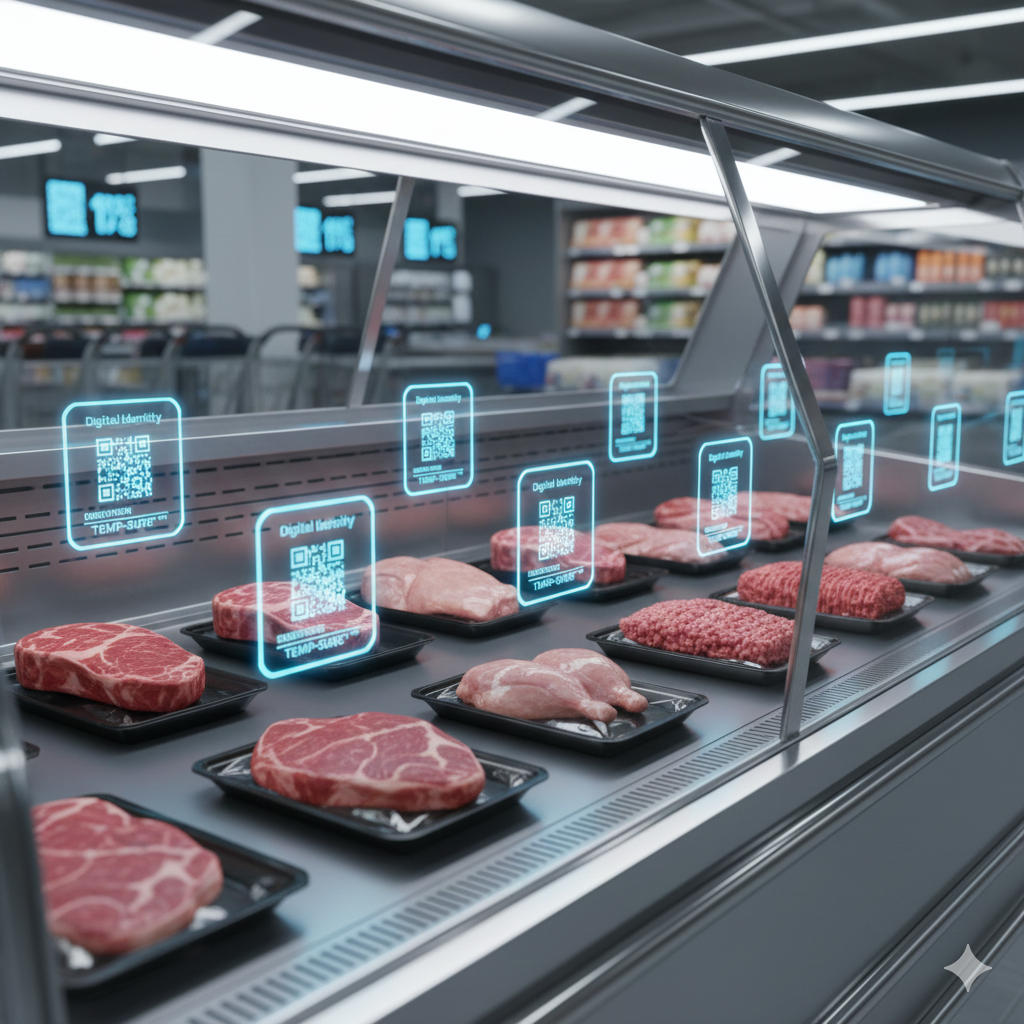
Today—January 20, 2026—was meant to be the “Big Bang” for FSMA 204. Instead, it has become the start of the “ROI Era,” where smart firms are ignoring the enforcement delay to capture the massive financial gains of digital identity.
Inside the Jan 20th Issue:
-
The “Compliance Gap”: Why the 2028 extension is a trap for the slow.
-
Build-Your-Own AI: Logistics Reply launches the GaliLEA Agent Builder.
-
Insurance Pivot: Lloyd’s new endorsement for cyber-enabled cargo theft.
1. The FSMA 204 “Internal Go-Live”: Why Top Firms Aren’t Waiting
Today marks the original compliance date for FSMA Rule 204. Despite the official 30-month enforcement extension to July 2028, industry leaders like Avery Dennison and Walmart are treating today as a strategic milestone. Avery Dennison’s latest report, “Making the Invisible Visible,” forecasts that food waste—driven largely by meat and perishables—will cost retailers $540 Billion annually by 2026.
The data is clear: 61% of organizations still lack full visibility into where waste occurs. Firms are now bypassing regulatory minimums to implement RFID and Digital Identity solutions. Walmart and Kroger have successfully trialed item-level RFID in high-moisture meat cases and bakeries, enabling real-time stock rotation and cutting manual labor by over 700 hours annually. By assigning a “Digital Identity” to every unit, these firms are turning a compliance headache into a $94B recovery opportunity.
The extension is a gift of time, not an excuse for inaction. If you wait until 2028 to solve your “blind spots,” you will have lost billions in avoidable waste. Strategic VPs are using 2026 to harden their item-level visibility to recapture margins that “invisible” waste is currently eroding.
2. GaliLEA Dynamic Intelligence: Build Your Own Warehouse AI Agents
Logistics Reply just announced the launch of GaliLEA Dynamic Intelligence, a new “AI Agent Builder” natively embedded within the LEA Reply platform. This move transforms AI from a vendor-provided tool into a user-configurable asset, allowing logistics teams to design and deploy their own autonomous agents.
Using a visual interface, users can now build agents that correlate data from internal WMS and external IoT sensors to detect anomalies and trigger workflows independently. These agents don’t just “report” a delay; they can be configured to autonomously re-allocate labor or update transport orders based on real-time operational shifts. This “no-code” approach to agentic AI drastically reduces the technical barrier to entry for complex automation.
We have reached the “Build-Your-Own” era of Agentic AI. You no longer need a team of data scientists to create a self-healing warehouse. The competitive edge in 2026 belongs to the VPs who empower their operational teams to build agents that solve specific local bottlenecks.

New! Tracking Tech - Planning, Implementation & Best Practices for 2026
Based on 20+ years experience of implementing 100s of GPS tracking projects, we have written this easy-to-read best practice guide and checklist to help you plan and implement GPS tracking and realtime visibility solutions. Download Your Free 2026 Guide Here
3. Lloyd’s of London: Cyber-Theft is Now Officially Insurable
The Lloyd’s Market Association (LMA) and the Joint Cargo Committee (JCC) have introduced a critical new endorsement (JC2025-026). This wording clarifies that physical theft remains a covered peril even when a cyber-attack is used to facilitate the breach, such as spoofing container release codes or manipulating routing data.
For years, the “Cyber Exclusion” (LMA5403) left a grey area: if a hacker “unlocked” a digital seal and a human took the goods, was it a cyber loss or a theft? The new endorsement (specifically Clause 4) confirms that if human intervention physically removes the goods, coverage holds. This recognizes the reality of cyber-physical convergence in 2026 logistics.
This is the ultimate market validation for our “Weaponized API” warnings. Shippers must now audit their policies for the JC2025-026 endorsement. If your insurance isn’t updated to recognize cyber-enabled physical theft, your high-value visibility data is creating a liability instead of a safeguard.
💡 Idea for the Future: “The Forensic Digital Twin”
The Concept: Integrating Non-Fungible Digital Identifiers (NFDI) into every “Digital Twin” of a high-value shipment.
How it Works: Instead of a twin that just mirrors location, this “Forensic Twin” uses blockchain to record every API request made to the shipment’s data. If an unauthorized “Weaponized API” attempts to ping the shipment, the Digital Twin “self-quarantines,” generating a forensic report for the Lloyd’s-approved insurer and instantly alerting local law enforcement with the GPS-locked coordinates.
The Strategic Why: We turn our visibility data into a proactive legal witness, making high-value cargo too high-risk for digital criminals to touch.
📅 Industry Calendar: Upcoming Tradeshows
-
RILA LINK 2026 (Feb 1–4 | Orlando, FL): The best place to see Avery Dennison’s “Digital Identity” solutions in a live retail environment.
-
Manifest 2026 (Feb 9–11 | Las Vegas, NV): Expect a live demo of the GaliLEA Agent Builder at the Logistics Reply booth.
-
IntraLogisteX (March 18–19 | Birmingham, UK): A deep dive into the next generation of connected warehouse robotics and AI.