


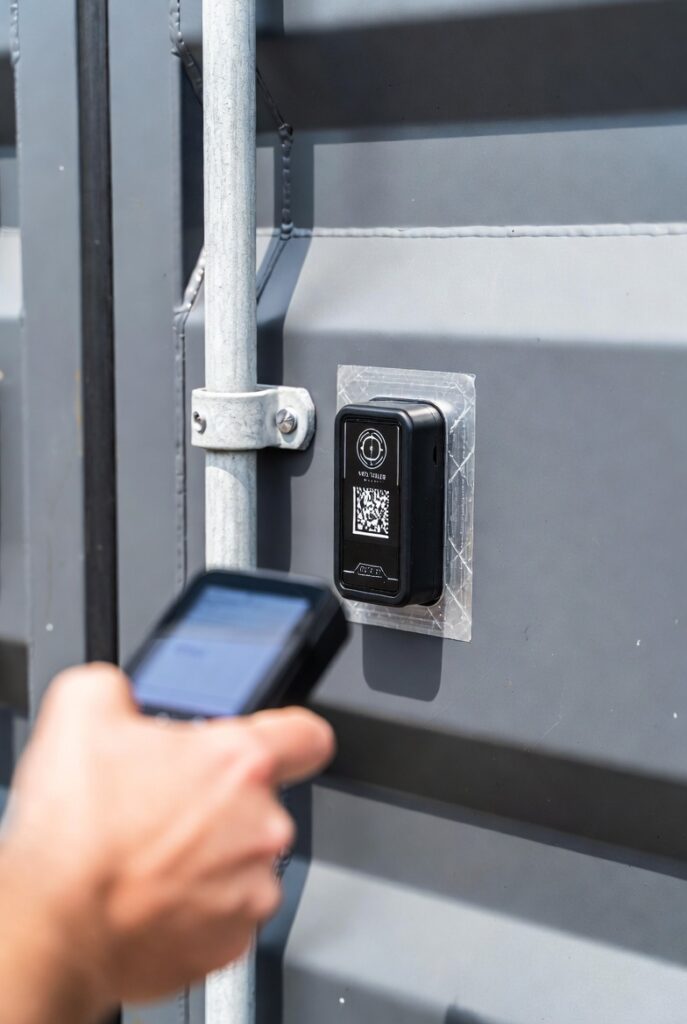
Tracking Tuesday Summary: Key Innovations
- Real-Time Monitoring: 5G and IoT sensors enable predictive analytics to stop disruptions before they happen.
- Cold Chain Tracking: New BLE smart labels and AI ensure the integrity of pharmaceuticals and sensitive cargo.
- High-Value Security: Blockchain creates an immutable Chain of Custody, reducing fraud and securing assets against rising cargo theft.
Welcome to the latest edition of Tracking Tuesday, your essential guide to the cutting edge of supply chain visibility. This week, we focus on the core technologies—IoT, AI, and 5G—that are transforming simple tracking into powerful, predictive, and proactive operations across the most sensitive logistics segments.
1. Real-Time Package Monitoring: Beyond the Dot on a Map
Summary: The shift from passive package status updates to continuous, granular, and condition-based monitoring, driven by the rollout of 5G and sophisticated IoT sensor networks.
The modern supply chain is defined by the expectation of immediate transparency. Real-Time Package Monitoring (RTPM) has evolved from simple GPS location to a complex system where smart sensors and RFID tags provide granular visibility into the location and condition of goods. Technologies like 5G connectivity are enabling this revolution, offering significantly higher speeds and lower latency, which allows IoT devices to transmit larger amounts of data faster and more reliably. This data stream, when processed by AI and Machine Learning, enables proactive analytics, allowing logistics providers to anticipate and mitigate disruptions like route deviations or unexpected delays before they impact delivery.
Key Quote: “By 2025, we can expect real-time tracking to become even more sophisticated and integral to logistics operations. The proliferation of 5G networks will enhance connectivity, enabling faster data transmission and more reliable communication between devices.”
Source Link: Real-Time Tracking: Enhancing Logistics Efficiency by 2025 (Modaltrans)
2. Cold Chain Tracking: Protecting Perishables and Pharmaceuticals
Focus: The rapid growth and necessity of real-time monitoring solutions to maintain the integrity of temperature-sensitive cargo, from fresh produce to high-value life science products.
The cold chain tracking and monitoring market is experiencing rapid expansion, projected to reach a significant market value by 2028. This segment is critical for two major industries: pharmaceuticals (including vaccines and biologics) and global food supply. Tracking devices—both permanently installed on refrigerated containers (reefers) and temporary units placed directly with the cargo—are incorporating data logging, satellite positioning, and real-time communications. This allows logistics managers to intervene immediately if a temperature deviation occurs, which is crucial since “goods transported in the cold chain are in many cases of higher value and more sensitive to unplanned stops and temperature deviations.” Major carriers are investing heavily, with one market leader rolling out a system to track its entire fleet of approximately 380,000 refrigerated containers in real time.
Key Quote: “Goods transported in the cold chain are in many cases of higher value and more sensitive to unplanned stops and temperature deviations. Having access to real-time data on the location and condition of the cargo helps managers to save the cargo load if an unexpected event occurs.”
Source Link: Cold Chain Tracking and Monitoring Market Report 2025 (ResearchAndMarkets.com via Business Wire)
3. High-Value Shipment Tracking: Security and Chain of Custody
Focus: Utilizing advanced technologies like Blockchain and comprehensive sensor packages to ensure security, prevent cargo theft, and maintain an immutable chain of custody for luxury goods, electronics, and mission-critical components.
The logistics for high-value goods—a market forecasted to grow by over 20% annually in some regions—demands more than just tracking; it requires robust security measures and absolute accountability. Key metrics for this sector include damage/loss rates, shipment visibility, and the unbroken Chain of Custody. Solutions have moved beyond simple GPS to include IoT sensors that provide real-time alerts for light, shock, and unauthorized container openings, often paired with geofencing. Furthermore, Blockchain technology is emerging as a critical tool, providing a transparent and immutable digital record of a shipment’s entire journey, which is invaluable for proving authenticity and simplifying the auditing process.
Key Quote: “Blockchain technology can be used to create an immutable and transparent record of a shipment’s chain of custody. Each party involved in the supply chain can record their interactions with the goods, providing an unforgeable digital trail.”
Source Link: How to Manage High Value Goods Shipments in Today’s Logistics Landscape (GPX)