


The Rise of Autonomous Execution
Welcome to this week’s edition of Tracking Tuesday. It is February 10, 2026, and the landscape this morning is defined by “Agentic Execution”—moving beyond simple visibility pings toward platforms that can autonomously prioritize freight and provide sub-meter accuracy within the four walls.
The big news from Manifest Vegas this week isn’t just better visibility—it’s Autonomous Execution. In 2026, knowing where a pallet is located isn’t enough. You need systems that act on that data before you even know there’s a problem.
This week’s Tracking Tuesday Highlights:
✅ Sub-Meter Reality: Reelables’ 10cm-accurate smart labels are making manual scans obsolete.
✅ Yard Overrides: Kaleris ColdLink automatically prioritizes at-risk cold loads, bypassing the warehouse queue.
✅ Live Ocean ETA: Hapag-Lloyd & WiseTech are processing millions of IoT pings to kill the ocean “visibility lag.”
1. Reelables Launches 10cm-Accurate Bluetooth Smart Labels
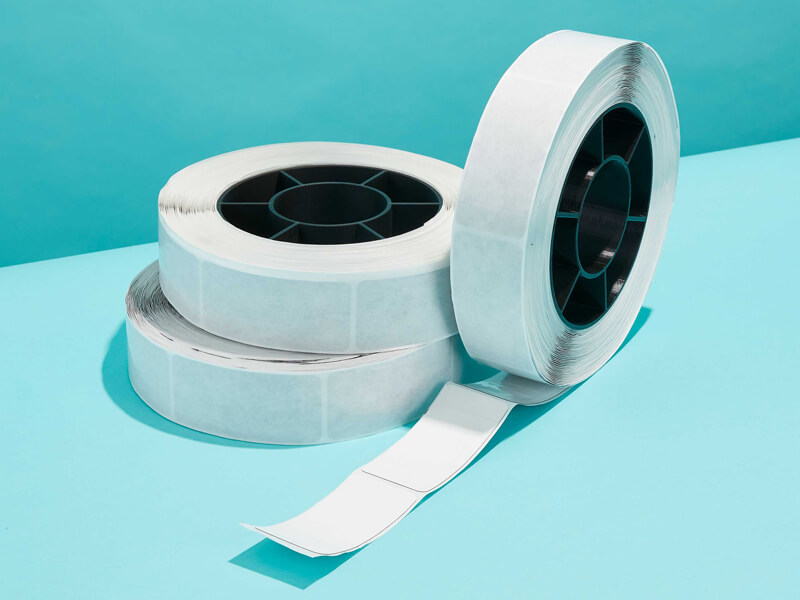
Announced at Manifest 2026 in Las Vegas, Reelables has launched a breakthrough in Real-Time Location Systems (RTLS) with the first Bluetooth smart label capable of 10cm indoor accuracy. This innovation, powered by IOSEA’s “SEAgnal” technology, delivers performance previously exclusive to expensive Ultra-Wideband (UWB) solutions but at a fraction of the cost.
These thin-film, printable labels use Angle-of-Arrival (AoA) algorithms to eliminate the “blind spots” in high-velocity warehouses. Unlike standard RFID, which requires manual gate scans, these active tags provide a continuous “heartbeat,” allowing for sub-meter “Digital Twin” precision. This enables automated work-order validation and hands-free inventory reconciliation across thousands of items simultaneously.
“When you have this level of accuracy, knowing where every asset is down to 10 centimeters, you operate with a precision that simply wasn’t possible before.” — Brian Krejcarek, Co-Founder, Reelables.
For VPs, this is the end of manual barcode scanning. If your warehouse still relies on a human “triggering” a scan to update the WMS, you are already behind the 2026 efficiency curve.
2. Kaleris “ColdLink”: From Passive Alerts to Yard Orchestration
Kaleris debuted ColdLink at Manifest 2026, a software suite designed to solve the “Handover Gap” in cold chain logistics. ColdLink integrates Yard Management (YMS), Transportation Management (TMS), and real-time IoT sensing to create an automated feedback loop for temperature-sensitive inventory.
ColdLink shifts cold chain management from FIFO (First-In, First-Out) to FEFO (First-Expiring, First-Out). If an IoT sensor detects a temperature variance or low fuel in a reefer sitting in the yard, the YMS parameters automatically override standard sequencing. It triggers a “hot move,” instructing the driver to dock immediately to prevent spoilage before a human supervisor even sees the alert.
Visibility is useless without a mechanism for execution. ColdLink proves that in 2026, the value is not in the “alert,” but in the automated override that protects your margin from human error or dwell-time delays.

New! Tracking Tech - Planning, Implementation & Best Practices for 2026
Based on 20+ years experience of implementing 100s of GPS tracking projects, we have written this easy-to-read best practice guide and checklist to help you plan and implement GPS tracking and realtime visibility solutions. Download Your Free 2026 Guide Here
3. WiseTech & Hapag-Lloyd: The IoT “Live ETA” Revolution
In a massive move for ocean visibility, WiseTech Global and Hapag-Lloyd have launched a live pilot integrating Hapag-Lloyd’s fleet of 2 million smart containers directly into the CargoWise ecosystem. This is the first time a major carrier’s raw IoT data is being processed at scale into a “Live ETA” product.
This partnership bypasses the traditional “milestone” reporting (which often lags by hours) in favor of frequent IoT pings. The system uses advanced algorithms to predict arrival times with 75% higher accuracy for end-to-end managed journeys. It detects anomalies—such as unauthorized deviations or inland bottlenecks—in real-time, allowing shippers to adjust their downstream production schedules dynamically.
“The shipping industry has long relied on discrete event updates that lag. We’re turning IoT data into intelligence that customers can act on.” — Zubin Appoo, CEO, WiseTech Global.
The “Black Hole” of ocean transit is officially closing. Strategic VPs should now be demanding “Live ETA” data from every carrier to slash safety stock buffers.
💡Idea for the Future: The “Autonomous Dock Gate”
The Concept: Integrating Reelables’ 10cm accuracy with Kaleris’ yard orchestration to create a “Zero-Touch Dock.”
How it Works: As a truck enters the geofence, the yard system recognizes the at-risk load (FEFO). The 10cm RTLS tags on the pallets inside communicate with the dock’s automated guidance system. The dock door opens only for the specific bay that minimizes travel time for that high-priority SKU, and the WMS is updated without a single human scan or button press.
The Strategic Why: We remove the final friction point in the supply chain: the human decision-making lag at the dock door.
📅 Industry Calendar: Upcoming Tradeshows.
- TPM 2026: March 1–4 | Long Beach, CA. Focus: Trans-Pacific container shipping and the integration of carbon-aware predictive ETAs.
-
IntraLogisteX (March 18–19 | Birmingham, UK): A deep dive into the next generation of connected warehouse robotics and AI.
- LogiMAT 2026 (March 24–26 | Stuttgart, Germany): The premier event for deep-diving into the RTLS and robotics integration mentioned in the Reelables breakthrough.