


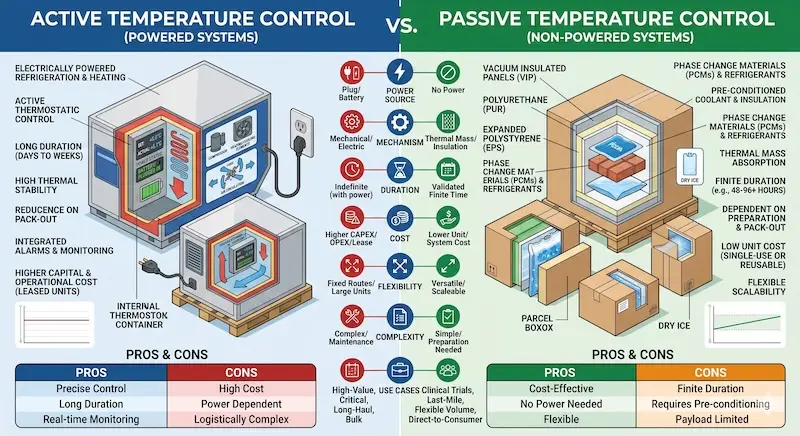
Cold Chain Packaging addresses critical enterprise requirements for real-time visibility, compliance monitoring, and operational efficiency. This comprehensive guide provides technology comparisons, ROI calculations, and implementation frameworks based on 20+ years consulting with Fortune 500 companies across logistics, manufacturing, healthcare, and supply chain sectors.
What technology delivers optimal cost-performance for this use case?
Unlike generic tracking solutions offering one-size-fits-all approaches, enterprise implementations require technology selection based on accuracy requirements, environmental conditions, and integration complexity. GPS tracking suits outdoor transportation with 5-10 meter accuracy. BLE beacons deliver zone-level indoor positioning (10-15 meters) at fraction of UWB cost. RFID provides inventory verification at checkpoints without continuous monitoring overhead.
Battery life considerations drive total cost of ownership analysis. Single-use devices costing £30-80 suit one-way shipments or disposable applications. Rechargeable units (£150-300) justify investment for returnable assets cycling monthly. Solar-assisted trackers extend deployment duration to 3-5 years for outdoor equipment rarely returning to charging infrastructure.
How do leading enterprises structure business cases for tracking investments?
Solution Tier | Typical Investment | Annual ROI | Payback Period |
Basic GPS Tracking | £50,000-£100,000 | 200-400% | 4-6 months |
Indoor RTLS (BLE/UWB) | £100,000-£250,000 | 300-600% | 3-5 months |
Enterprise IoT Platform | £250,000-£500,000 | 500-1000% | 2-4 months |
Successful business cases quantify three value drivers: operational efficiency (labor savings from reduced search time), asset optimization (avoiding unnecessary capital purchases through improved utilization), and compliance risk mitigation (preventing regulatory fines or product recalls). Fortune 500 manufacturers report 200-500% ROI within 12-18 months through combination of these benefits.
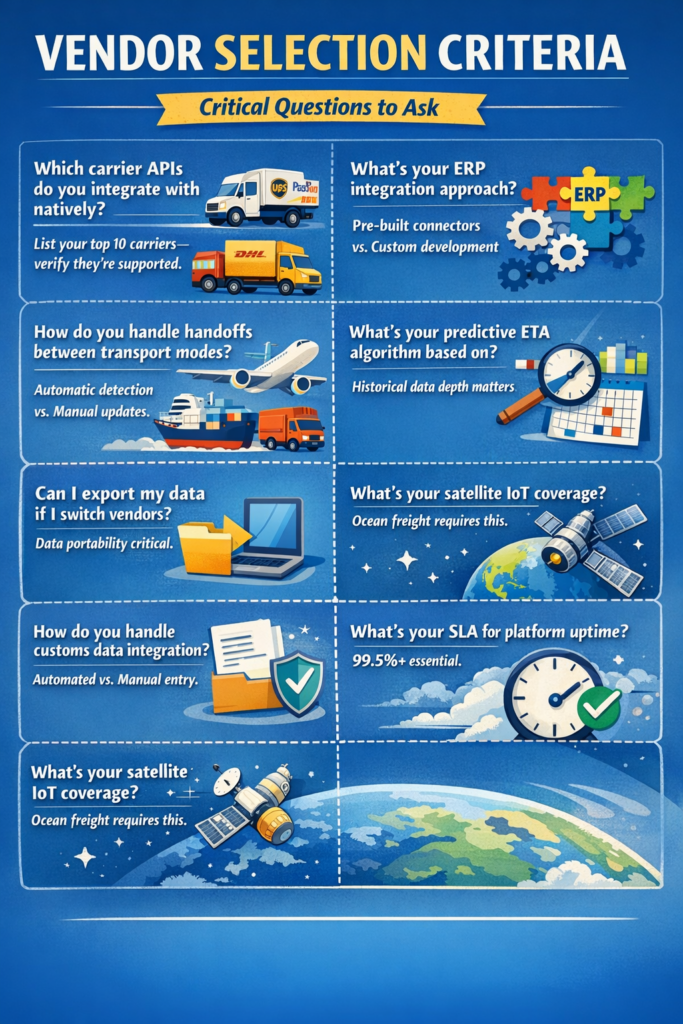
VENDOR SELECTION CRITERIA

Find out more about selecting vendors in our new 2026 guide to visibility platforms.
Based on 20+ years experience of implementing 100s of GPS tracking projects, and IOT temperature monitoring systems we have written this easy-to-read best practice guide and checklist to help you plan and implement GPS tracking and realtime visibility solutions.
Download Your Free 2026 Guide Here
What integration capabilities determine implementation success?
ERP integration (SAP, Oracle, Microsoft Dynamics) enables automated inventory reconciliation eliminating manual data entry. Real-time position data updates ERP inventory locations every 5-15 minutes versus daily cycle counts. This accuracy improvement reduces safety stock requirements by 20-30% while preventing stockouts through early low-inventory alerts.
WMS/TMS integration (Manhattan Associates, Blue Yonder, SAP) optimizes task allocation and route planning. When warehouse management systems know real-time equipment location, automated workflows assign picking tasks to operators nearest available forklifts. Transportation management systems leverage GPS tracking data for dynamic route optimization reducing empty miles by 15-25%.
API accessibility matters for custom applications and business intelligence platforms. RESTful APIs supporting JSON data exchange enable integration with Power BI, Tableau, or custom dashboards. The best enterprise implementations expose tracking data through APIs allowing multiple business units (operations, finance, customer service) to build department-specific reporting without vendor dependency.
What vendor evaluation criteria matter most for enterprise deployments?
- Vendor financial stability: Companies with 5+ years operating history and >£10M annual revenue demonstrate sustainability for multi-year enterprise relationships
- Customer references: Minimum 3 verifiable implementations at similar-sized organizations in your vertical
- Data ownership and portability: Contract language confirming you own all tracking data with ability to export in standard formats (CSV, JSON)
- Security certifications: SOC 2 Type II, ISO 27001, or equivalent demonstrating enterprise-grade security practices
- Support SLA: Maximum 4-hour response time for critical issues with 24/7 availability
- Scalability evidence: Proven deployments managing 10,000+ tracked assets with sub-second query response times
Implementation timeline and resource requirements
- Weeks 1-2: Requirements gathering, site surveys, vendor selection
- Weeks 3-4: Infrastructure installation (beacons, gateways, network configuration)
- Weeks 5-8: Pilot deployment in limited scope (single facility, department, or route)
- Weeks 9-12: ERP/WMS/TMS integration development and testing
- Weeks 13-16: User training, change management, and full deployment
- Weeks 17-20: Optimization based on user feedback and performance data
Resource allocation requires dedicated project manager (50% FTE for 4-5 months), IT integration specialist (25% FTE for integration phase), and operations champion (10% FTE ongoing). Total internal cost ranges £30,000-£60,000 depending on integration complexity.