


Insuring the Silicon Age: Telematics, Theft Rings, and Thin Film
Welcome to this week’s edition of Tracking Tuesday.
The rapid scaling of global #AIDataCenters has created an unprecedented supply chain crisis: shipping values are outpacing the capacity of legacy insurance products.
Here is the breakdown of the major tactical shifts hitting the wires this week:
💥 The Helix Consortium Launch: Overhaul, Navium, and Lloyd’s of London have launched a $75M purpose-built transit insurance pool for AI hardware. The catch? It is entirely data-dependent. No real-time, pallet-level sensor feed = zero coverage.
📦 The AI Infrastructure Theft Epidemic: Criminal networks are using advanced digital reconnaissance to specifically target data center components. From high-density server racks to bulk copper wiring, thieves are walking away with multi-million dollar hauls by out-thinking standard broker vetting systems.
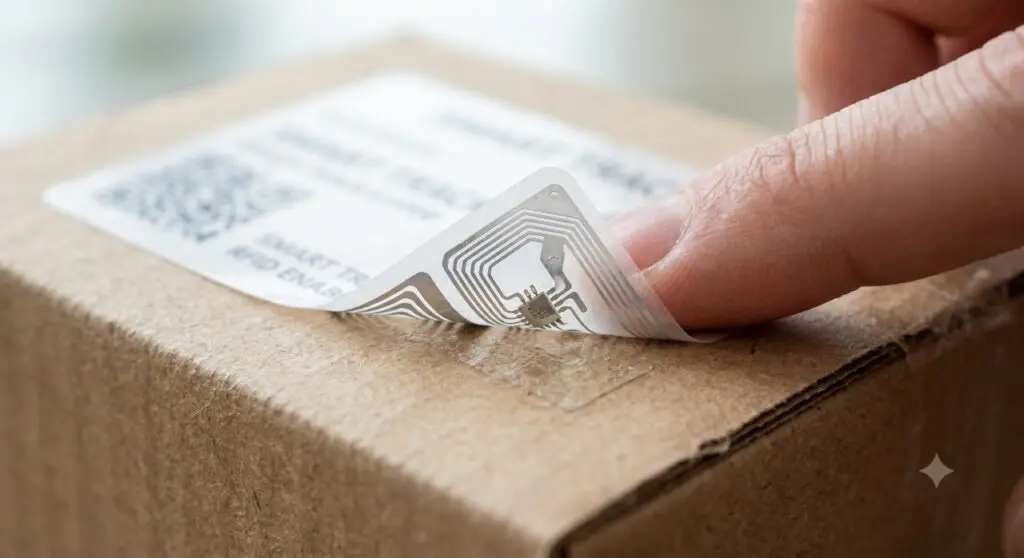
🏷️ The Paper-Thin Sensor Boom: The “Smart Labels in Logistics” 2nd Edition report dropped this week, tracking an industrial trajectory to 29.2 million cellular and LoRaWAN smart label units annually by 2030. The bulky, returnable tracker is dead; disposable, item-level stickers are taking over.
The Bottom Line: In June 2026, Visibility is no longer an operational bonus—it is a non-negotiable requirement for corporate insurability.
The Helix Consortium: Real-Time Telematics Unlocks $75M Transit Limits
On June 1, 2026, supply chain risk management pioneer Overhaul, alongside specialized underwriter Navium and Lloyd’s of London, announced the commercial launch of the Helix Consortium. This is the world’s first dedicated insurance solution designed exclusively for AI infrastructure cargo, offering a single-agreement transit limit of up to $75 million.
Criminal syndicates have moved beyond simple email spoofing and fake load-board postings.
The breakneck speed of global AI data center construction has outpaced traditional cargo insurance limits. GPU clusters, liquid-cooled server racks, and advanced silicon are so dense with value that an individual trailer or shipping container regularly carries tens of millions of dollars in liability. Conventional insurers are fleeing this risk due to severity profiles.
The Helix Consortium resolves this by moving from forensic underwriting to Live Telematics Enforcement. To qualify for the $75M coverage limit, shippers must install active unit-level label trackers per pallet. These IoT sensors stream continuous ambient and locational data directly to global Security Operations Centers (GSOCs).
“A new risk class demands a new solution… The rapid build-out of global AI infrastructure has created an unprecedented cargo risk class… outpacing the capacity of traditional cargo insurance.” — Overhaul Official Launch Manifesto, June 2026
In 2026, Visibility = Insurability. If you cannot provide real-time, sensor-driven verification of your cargo’s exact environmental and locational state, you will soon be entirely unable to purchase corporate transit liability coverage for high-tech components.
AI-Driven Theft Rings: Target-Scanning the Silicon Chain
A comprehensive intelligence brief published on May 31, 2026, exposed a highly sophisticated macro trend: organized criminal networks are now utilizing their own AI reconnaissance models to track, intercept, and liquidate AI data center infrastructure components—specifically targeting server racks, RAM, and bulk copper shipments.
The economic motivation is stark: supply chain disruption and high demand have driven the cost of a single 25-tonne load of industrial copper up by over 33% to more than $300,000. Criminal syndicates are scanning digital freight boards and compromising broker emails to identify shipments routed to active data center construction hubs. This has triggered an alarming surge in targeted thefts; recently, a single U.S. broker saw $5 million worth of computing hardware vanish across less than a dozen coordinated, deceptive pick-ups.
“With the emergence of AI data centers, you have a lot of components for those AI data centres being stolen… Crooks are increasingly deploying AI to find and steal those goods.” — Keith Lewis, CargoNet Operations Report.
Criminal networks are executing an information war. Shippers cannot protect these high-stakes assets using legacy, passive scheduling. Shipments must be obfuscated in transport management systems (TMS), and physical trailers must be continuously monitored via multi-sensor IoT devices capable of detecting micro-deviations from geofenced routes.
Supplier Quick Quotation Request
The Smart Label Inflexion: 29.2M Units Annually by 2030
The publication of the “Smart Labels in Logistics” 2nd Edition report this week revealed that wide-area smart labels (cellular and LoRaWAN-enabled) are expanding rapidly, with global shipments projected to scale to 29.2 million units annually by 2030.
The primary driver of this explosion is the radical miniaturization of WWAN (Wireless Wide Area Network) modules and printed battery tech. Shippers are moving away from bulky, returnable plastic trackers. The modern smart label is a flexible, paper-thin sticker that adheres directly to individual corrugated cartons. By utilizing ultra-thin zinc-manganese or printed ambient power matrices, these labels eliminate battery disposal penalties while streaming item-level location, temperature, and shock data over standard cellular infrastructure directly to the cloud.
“The transition to ultra-thin, low-power wide-area labels signals the end of the blind spot in the parcel network. Item-level tracking has left the laboratory.” — Smart Labels in Logistics 2nd Edition.
At this scale, item-level telemetry is becoming an industry standard rather than a pilot luxury. Shippers must prepare their data architectures today to ingest millions of discrete edge pings or risk being drowned in un-orchestrated noise.
🌌 Idea for the Future: THE “HELIX ANCHOR” ECOSYSTEM
The Concept: A self-underwriting shipping environment where the cargo’s real-time telemetry dynamically adjusts the financial structure of the active insurance policy mid-transit.
How it Works: By tying newly scaled Disposable WWAN Smart Labels directly to automated parametric insurance smart contracts, the cargo behaves as an autonomous financial agent. If a pallet of AI server components experiences a sudden spike in vibration (G-force shock) or deviates from its approved lane-corridor, the smart label immediately sends an alert via satellite/cellular. The insurance policy dynamically updates: it logs the exact cryptographic proof of the event, raises the threat condition tier, initiates an automated recovery team via Overhaul’s GSOC, and locks down the physical container valves—all within a fraction of a second.
The Strategic Why: It eliminates manual claim adjustments and human latency during high-stakes theft windows. The freight financially protects itself by enforcing its own risk parameters through real-time telemetry.
📅 Industry Calendar: Upcoming Events
TSX Technology Investor Day (TMX Market Centre, Toronto) Date: June 2, 2026 (Live Today)
- SIL (June 6–6, 2026 | Barcelona, Spain): The leading international trade fair for logistics, transport, intralogistics and supply chain.
ASCM & IBF S&OP Conference (June 11–12, 2026 | Chicago, IL): Focus on integrating high-fidelity Henkel packaging data into financial planning.
ASCM Webinar: Agentic AI 101 (July 9, 2026 | Virtual): The tactical roadmap for deploying “Finmile-style” agents in your own fleet.