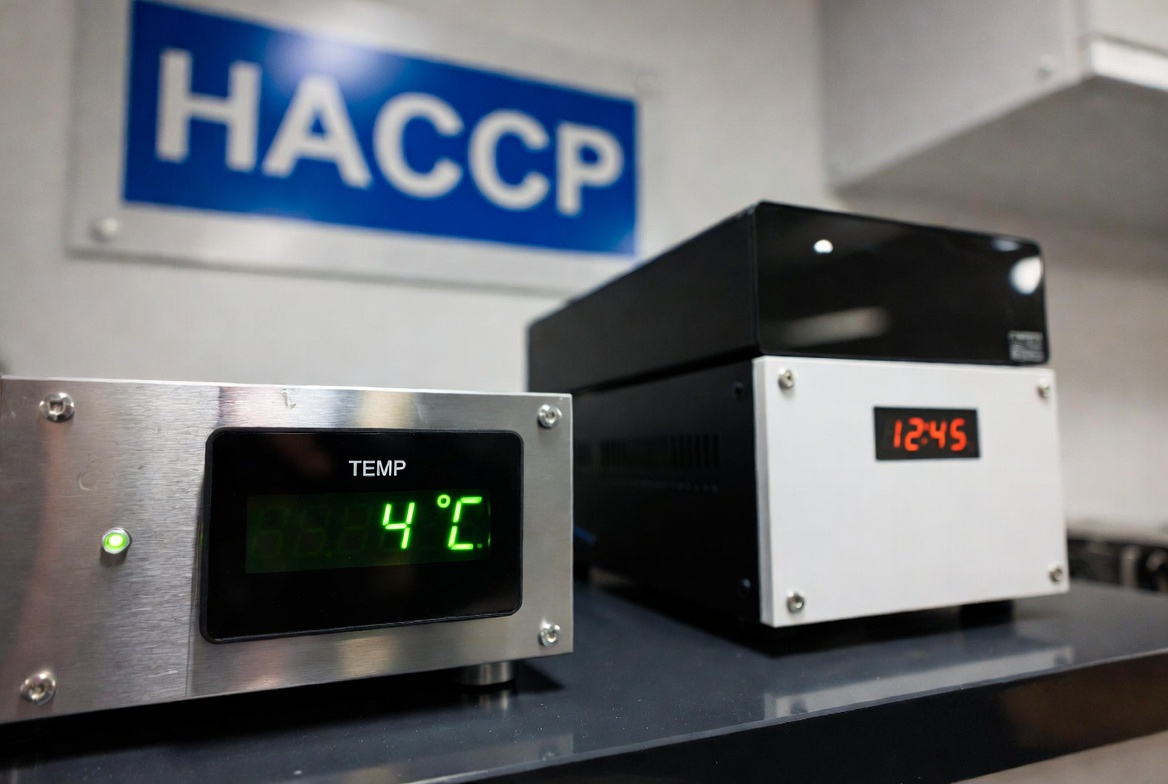
HACCP (Hazard Analysis Critical Control Points) compliance requires continuous temperature monitoring demonstrating food products remained within safe zones throughout receiving, storage, preparation, and service. FSA (Food Standards Agency) inspections result in enforcement notices, closure orders, and prosecutions when temperature records fail to prove compliance with 8°C maximum for chilled foods or 75°C minimum for hot holding.
This guide details automated monitoring systems, critical control point documentation, and corrective action protocols for restaurant chains, contract catering, healthcare food service, and retail prepared foods operations managing 5-500 locations.
What temperature ranges do UK and EU food safety regulations actually require?
Chilled food storage demands maximum 8°C with FSA guidance recommending 5°C or below for extended shelf life. Unlike pharmaceutical cold chain requiring ±0.5°C precision, food safety regulations establish maximum thresholds where exceeding 8°C triggers time-based disposal protocols. Foods held between 8-63°C for cumulative 4 hours require disposal regardless of visual appearance or smell preventing bacterial growth to dangerous levels.
Hot holding requires minimum 63°C maintained throughout service period preventing bacterial proliferation. Restaurant buffets, hospital patient meals, and contract catering operations holding cooked food for 2-4 hours must demonstrate continuous temperature above 63°C. Environmental Health Officers specifically request hot holding temperature logs during inspections, with missing documentation resulting in immediate improvement notices affecting food hygiene ratings.
Frozen storage requires -18°C or below per EC Regulation 853/2004 governing food of animal origin. Unlike chilled storage where brief excursions above 8°C for 30-60 minutes during loading remain acceptable, frozen food exceeding -12°C triggers mandatory quality assessment before sale. Retailers report £15,000-£40,000 monthly product write-offs from freezer failures discovered through customer complaints rather than automated monitoring alerts.
How do automated monitoring systems prevent manual temperature logging failures?
Monitoring Approach | Compliance Evidence | FSA Inspection Rating | Cost per Location |
Manual paper logs (3x daily) | Gaps during staff breaks, weekends | 3 (Generally Satisfactory) | £0 (staff time only) |
WiFi sensors (15-min intervals) | Continuous 24/7 with alarm alerts | 5 (Very Good) | £800-1,500 |
Cellular IoT (real-time) | Instant SMS alerts + cloud backup | 5 (Very Good) | £1,200-2,500 |
Manual logging creates compliance gaps during overnight hours, weekends, and staff holidays. Kitchen managers completing temperature checks at 8AM, 1PM, and 6PM miss equipment failures occurring at 10PM or 3AM. Automated systems recording every 15 minutes provide complete audit trail demonstrating due diligence even during periods when no staff present on-site.
Falsified manual records represent significant prosecution risk. Environmental Health Officers recognize suspiciously consistent 5.0°C recordings across multiple refrigerators indicating fabricated data rather than genuine measurements. Automated systems eliminate this fraud risk through tamper-proof cloud storage with millisecond-accurate timestamps proving measurement authenticity during legal proceedings.
WiFi-based monitoring suits single-site restaurants and small chains (2-10 locations) with reliable internet connectivity. Systems like Hanwell, Comark, and Testo integrate with existing network infrastructure requiring minimal installation complexity. Monthly platform fees of £15-40 per sensor enable affordable compliance for independent operators without upfront capital investment.
What corrective actions do HACCP plans require when temperature excursions occur?
Immediate product assessment determines whether affected food remains safe for consumption. Chilled foods exceeding 8°C for less than 2 hours can return to compliant storage and sell within reduced shelf life (24-48 hours versus original 5-7 days). Foods exceeding 8°C for 2-4 hours require immediate cooking if intended for hot service, or disposal if planned for cold service. Any food in danger zone (8-63°C) exceeding 4 cumulative hours demands mandatory disposal regardless of appearance.
Equipment failure documentation prevents repeat incidents. HACCP plans require recording root cause (compressor failure, door left open, power outage), corrective action taken (engineer called, food disposed, backup storage used), and preventive measures implemented (maintenance scheduled, staff retrained, backup alarm battery installed). FSA inspectors specifically request evidence that businesses learn from past incidents rather than experiencing repeated failures.
Staff notification protocols ensure rapid response minimizing product loss. Automated monitoring systems sending SMS alerts to duty manager, head chef, and facilities team enable 15-30 minute response versus 8-12 hour discovery delays with manual checking. One contract caterer reduced annual food waste from equipment failures by £180,000 (from £280,000 to £100,000) through real-time alerts enabling intervention before entire walk-in cooler inventory exceeded safe temperatures.
How do multi-site food service operations centralise temperature monitoring?
Cloud-based dashboards provide regional managers visibility across 50-500 locations from single interface. Unlike requiring individual site visits or phone calls requesting verbal temperature reports, automated platforms display real-time status for every refrigerator, freezer, and hot holding cabinet. Compass Group and Sodexo managing 1,000+ UK catering sites use centralized monitoring identifying underperforming locations requiring maintenance intervention or staff retraining.
Automated compliance reporting generates audit-ready documentation for FSA inspections. Systems export temperature data as PDF reports showing compliance percentage, alarm history, and corrective action logs. This automation eliminates 15-25 hours monthly per region previously spent manually compiling paper temperature logs into spreadsheets for corporate quality audits.
Predictive maintenance alerts identify equipment degradation before complete failure. Refrigerators showing increasing temperature trends (gradually rising from 3°C to 5°C to 7°C over weeks) indicate compressor problems requiring repair before catastrophic failure causes food loss. Proactive maintenance costs £300-800 per service call versus £8,000-£25,000 emergency refrigeration replacement plus £5,000-£15,000 lost inventory from sudden failure
VENDOR SELECTION CRITERIA
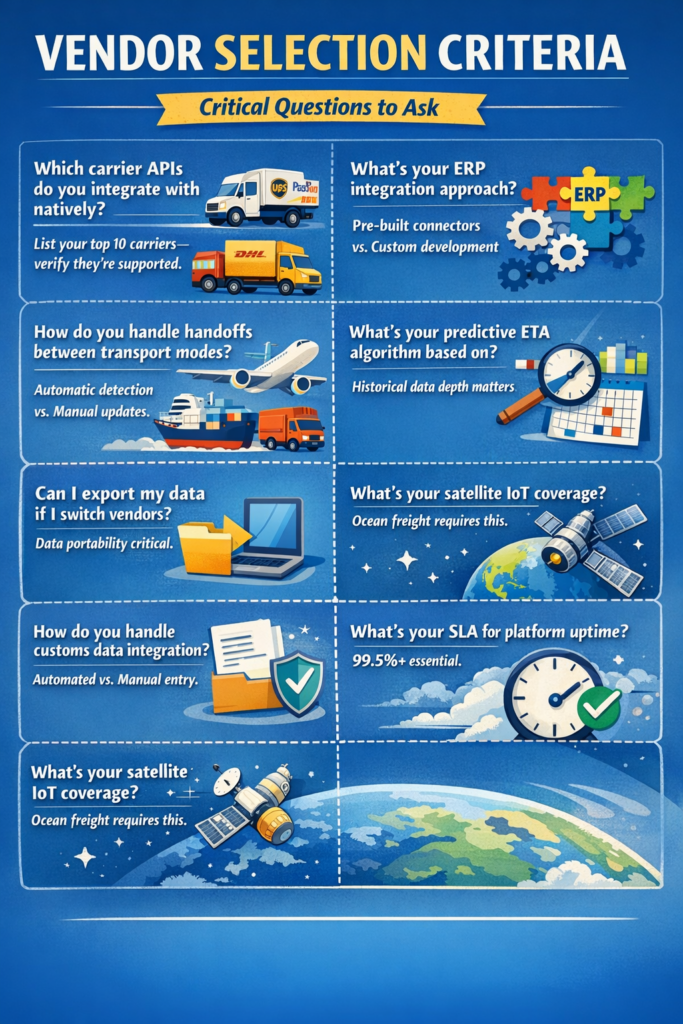
Find out more about selecting vendors in our new 2026 guide to visibility platforms.
Based on 20+ years experience of implementing 100s of GPS tracking projects, and IOT temperature monitoring systems we have written this easy-to-read best practice guide and checklist to help you plan and implement GPS tracking and realtime visibility solutions.
Download Your Free 2026 Guide Here
What ROI do restaurant chains achieve from automated temperature monitoring?
- Baseline: 25-location restaurant chain with 8 refrigeration units per site (200 total)
- Annual food waste from equipment failures: £120,000 (£4,800 per location)
- Manual temperature logging labor: 30 minutes daily per site × 25 sites × £12/hour × 365 days = £54,750
- Environmental Health improvement notices: 3 annually requiring consultant support = £15,000
- WiFi monitoring investment: £1,200 per location × 25 = £30,000 + £6,000 annual platform fees
- Food waste reduction: 70% improvement = £84,000 annual savings
- Labor savings: 80% reduction in manual logging = £43,800
- Avoided compliance penalties and consultant fees = £15,000
- Total annual benefit: £142,800
- First-year ROI: 296% | Payback period: 3.0 months
This calculation excludes additional benefits from Food Hygiene Rating improvement (moving from rating 3 to rating 5 increases customer traffic 15-25% for consumer-facing restaurants), reduced insurance premiums from demonstrating proactive food safety management (5-10% annual premium reduction), and brand protection preventing food poisoning outbreaks traced to temperature control failures (£500,000-£2M potential liability per incident).
Which critical control points require continuous monitoring versus periodic checks?
Cold storage rooms and walk-in refrigerators require continuous automated monitoring due to large inventory value at risk. A walk-in cooler storing £15,000-£40,000 prepared food inventory justifies £800-1,500 monitoring investment preventing total loss from overnight equipment failure. Manual checks every 4-8 hours cannot detect failures occurring between measurements causing entire inventory to exceed safe temperature before discovery.
Hot holding cabinets and bain-maries suit periodic manual verification during service periods. Unlike refrigeration running continuously 24/7, hot holding operates only during meal service (2-4 hours) with staff present enabling manual temperature checks every 30-60 minutes. Automated monitoring of hot holding delivers lower ROI unless operation runs extended hours (hospital patient feeding, 24-hour restaurant operations) when overnight staff absence creates compliance gaps.
Cook-chill production requires monitoring at multiple process stages. Central production kitchens cooking food Monday-Wednesday for Thursday-Sunday service across 20-100 satellite locations need blast chiller monitoring proving rapid cooling from 75°C to 8°C within 90 minutes, refrigerated storage validation maintaining 0-3°C during hold periods, and distribution vehicle monitoring during transit to final service locations. This multi-point monitoring prevents bacterial growth during 3-7 day interval between production and consumption
Implementation roadmap for multi-site temperature monitoring deployment
- Week 1-2: Conduct equipment audit identifying all refrigeration, freezers, hot holding requiring monitoring
- Week 3-4: Evaluate WiFi coverage at pilot location, select vendor platform (Hanwell, Comark, Testo)
- Week 5-6: Install sensors at pilot site, configure alarm thresholds and notification lists
- Week 7-8: Train staff on alarm response procedures, document corrective action protocols
- Week 9-10: Measure pilot results – food waste reduction, compliance improvement, staff feedback
- Week 11-16: Rollout to remaining locations at 5-8 sites per week deployment pace
- Week 17+: Ongoing optimisation using predictive maintenance alerts and trend analysis
Resource requirements: Operations manager (20% FTE for 4 months coordinating rollout), IT support (10 hours initial setup plus 5 hours per location), location managers (4 hours each for installation supervision and staff training). Total internal labor investment: 80-120 hours spread across 4-month deployment.
Strategic Tracking: Digital HACCP Compliance Temperature Monitoring Consultancy
Strategic Tracking connects food service operators with pre-vetted temperature monitoring vendors specializing in HACCP compliance across WiFi, cellular, and hybrid connectivity platforms. Our vendor-agnostic consultancy ensures optimal technology selection based on site count, connectivity infrastructure, and regulatory requirements while providing FSA audit-ready implementation documentation.
For vendor selection and implementation planning, contact us or visit https://www.strategictracking.com/realtime-tracking-food-beverage/