
The Convergence of Conflict and Connectivity
Welcome to this week’s Tracking Tuesday. It is March 10, 2026, and the industry is currently split between a logistics nightmare in the Middle East and a hardware renaissance in Nuremberg.
While Embedded World 2026 is currently unveiling the “guts” of the next generation of trackers, global supply chains are facing their most significant maritime shock since 2021.
1. The “Big & Bulky” Transparency Revolution: Home Depot
On March 5, 2026, The Home Depot launched the industry’s first real-time delivery tracker for “Big & Bulky” orders. For the first time, professional contractors and retail customers can see the live, breadcrumbed GPS location of flatbed trucks carrying lumber, concrete, and appliances.
Powered by the new Home Depot Driver Handheld™ application, this system transmits minute-by-minute GPS data directly to the customer’s mobile device. It eliminates the 4-hour “delivery window” and replaces it with turn-by-turn updates and a remaining-stop counter.
“Last-mile logistics for large deliveries have been a persistent blind spot. We’re pioneering a new level of transparency that gives Pros peace of mind and frees them up to focus on the job.” — Dee Walk, SVP of Enterprise Delivery Experience, The Home Depot.
Visibility is no longer a small-parcel luxury. If you aren’t providing live ETAs for 80lb bags of concrete, you aren’t meeting the 2026 B2B baseline.
2. Global Chokepoints: QatarEnergy & the 10.7% Reroute
On March 4, 2026, QatarEnergy declared Force Majeure on all LNG shipments following the de facto closure of the Strait of Hormuz. This, combined with renewed volatility in the Red Sea, has forced 10.7% of the global container fleet to abandon primary routes and begin the two-week detour around the Cape of Good Hope
The impact is dual-fold: Bunker Cost Shock and Equipment Imbalance. Emergency surcharges are hitting $4,000 per box, and “Dwell Time” is now the primary enemy of cold chain integrity. Your tracking platform must now pivot from “Location” to “Life Cycle”—monitoring battery life and environmental stability for an extra 14 days at sea.
Reliability is the new ROI. Shippers are currently trading freight rates for Schedule Integrity. In 2026, the carriers who can prove their rerouted “Live ETA” accuracy via IoT integrations (like Hapag-Lloyd/ZIM) will win the volume.
New! Tracking Tech - Planning, Implementation & Best Practices for 2026
Based on 20+ years experience of implementing 100s of GPS tracking projects, we have written this easy-to-read best practice guide and checklist to help you plan and implement GPS tracking and realtime visibility solutions. Download Your Free 2026 Guide Here
3. Live from Embedded World (Nuremberg): Hardware Intelligence
This morning in Nuremberg, Nordic Semiconductor (Hall 4A, Booth 310) debuted Nordic Fuel Gauge v2.0. This isn’t just a battery monitor; it’s an AI-adaptive “State-of-Health” (SoH) engine for IoT trackers, ensuring that devices don’t go dark during the extended reroutes mentioned above.
V2.0 uses adaptive battery modeling to track long-term degradation. It allows fleet managers to see the “Health” of their sensors through nRF Cloud, identifying anomalies across thousands of devices. Simultaneously, Semtech (Booth 3-353) launched a new 5G RedCap Modem specifically for industrial IoT, offering higher throughput than NB-IoT but with the power-sipping profile required for asset tracking.
For those attending Embedded World this week, focus on RedCap (Reduced Capacity) and Adaptive Battery Health. These are the technologies that will sustain 2026’s “Long-Haul” visibility requirements.
💡Idea for the Future: “The Resilient Ping”
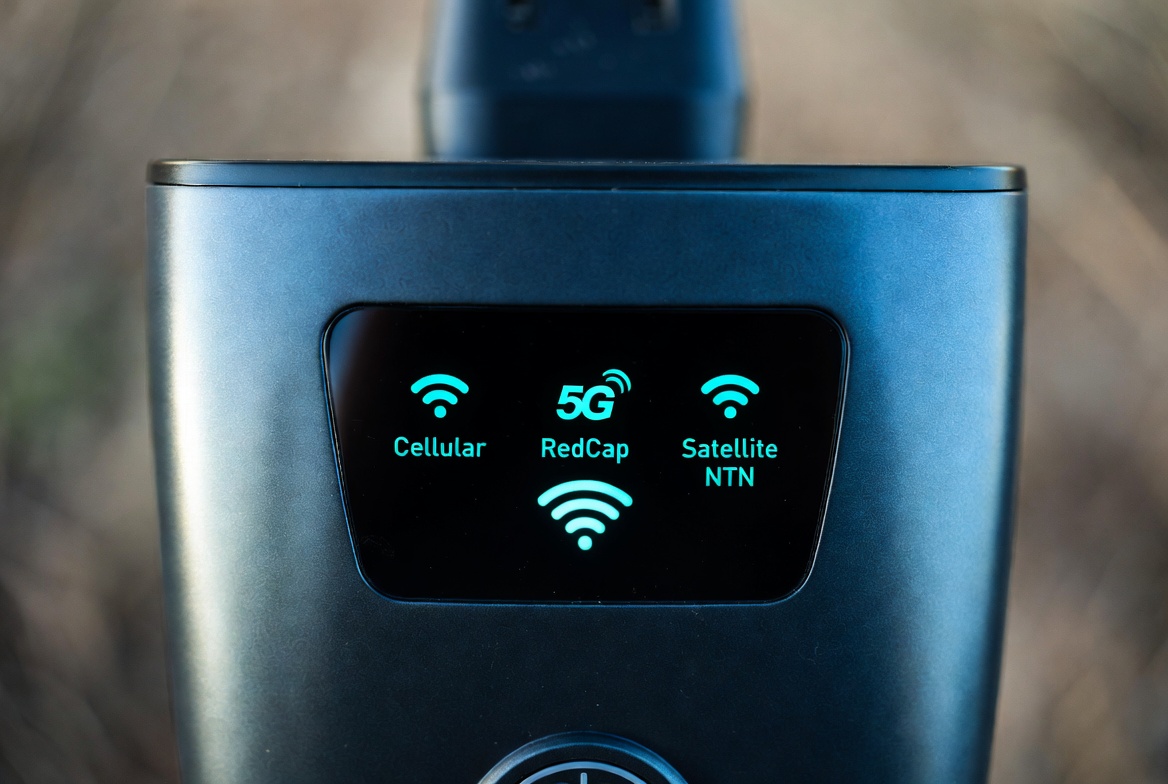
The Concept: A tracker that autonomously switches between Cellular, 5G RedCap, and Satellite NTN (Non-Terrestrial Network) based on route risk.
How it Works: As a container enters a “High-Risk Zone” (like the Gulf of Aden), the tracker detects potential jamming or signal loss and switches its “Priority” to an encrypted satellite ping.
The Strategic Why: Total continuity. By the end of 2026, a “Resilient Ping” strategy will be the only way to insure high-value cargo transiting global chokepoints.
📅 Industry Calendar: Upcoming Events
- Embedded World 2026 (Nuremberg | March 10–12): Happening Now. Visit Hall 3, Booth 125 (EBV Elektronik) for the latest in connectivity
-
LogiMAT 2026 (March 24–26 | Stuttgart, Germany): The premier venue for seeing sub-meter RTLS for the European market.
- MODEX 2026 (April 13–16 | Atlanta, GA): Where “Physical AI” and autonomous yard agents will be live in the demo lab.