
Waste Container, Skip & Bin Tracking
Know Where Your Waste Containers Are—and Bring Idle Assets Back Into Service
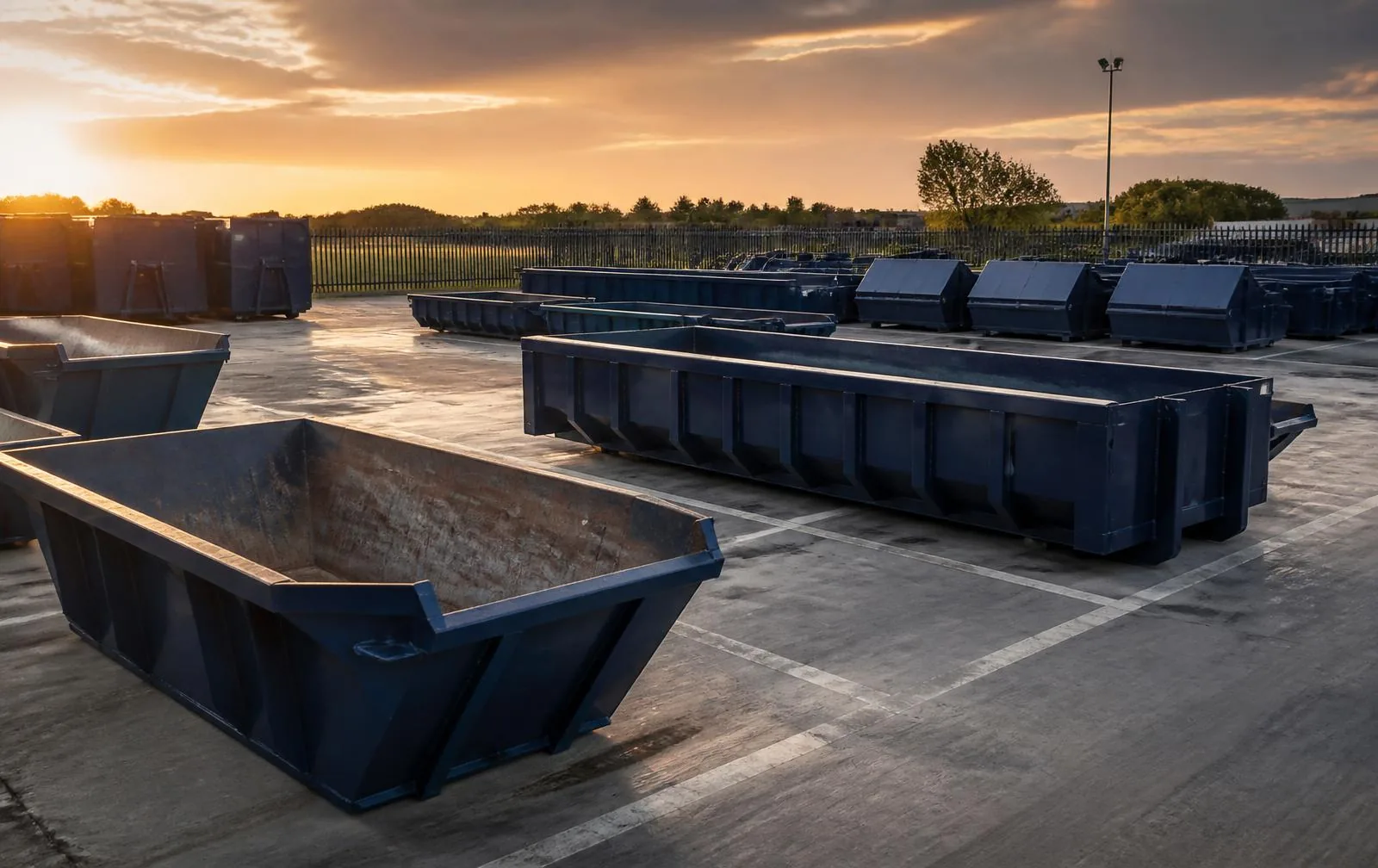
Track skips, bins, compactors, roll-on roll-off containers and recycling assets across depots, customer sites and operating regions. Strategic Tracking helps waste and environmental-service teams select the right trackers, connectivity and software for long-life visibility of unpowered container fleets.
- Independent technology selection
- Long-life tracking for unpowered assets
- Depot, customer-site and regional visibility
- UK and international projects
Asset
RoRo Container RC-284
Location
Customer Site — North Yard
Last movement
3 days ago
Dwell
18 days
Status
Review return schedule
Illustrative asset data.
What Is Waste Container Tracking?
Waste container tracking uses connected asset trackers, tags, gateways and software to record where skips, bins, compactors and other reusable containers were last located, when they moved and how long they remained at a site or within an operational zone.
It gives operators a more dependable view of a distributed container fleet, helping them locate available assets, investigate exceptions and improve the flow between depots, customers, treatment sites and subcontractors.
Location and movement data do not automatically reveal whether a container is full, empty, contaminated, collected or ready to invoice. Those statuses require the relevant sensor or a confirmed operational event.
This page sits beneath our industrial asset tracking solutions hub, alongside our guides to long-life tracking for non-powered assets, trailer and container tracking and returnable asset tracking.
The distributed fleet problem
You May Own Enough Containers but Still Be Short Where Demand Exists
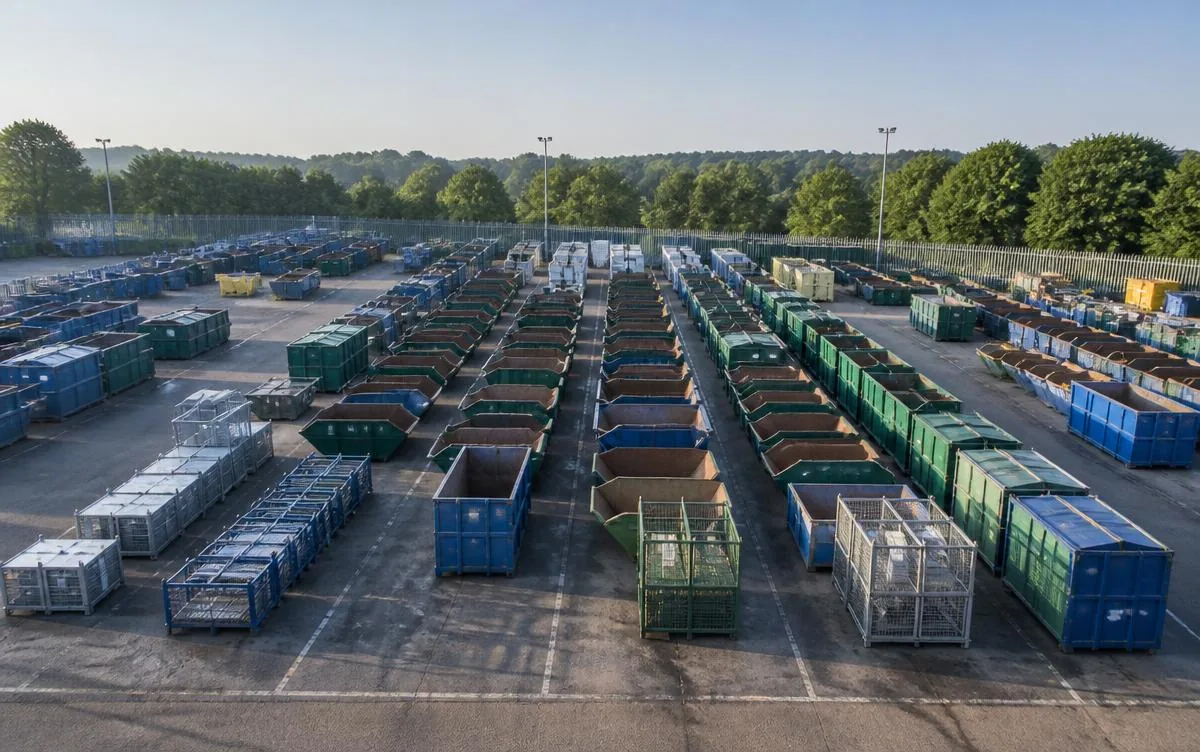
Waste containers spend much of their working life away from the depot. They may remain at customer premises, move between sites, pass through subcontractors or return without a reliable digital record. When visibility depends on calls, driver memory, tickets or spreadsheets, the apparent fleet and the physically available fleet can diverge quickly.
Customer-site dwell becomes invisible
Containers remain off-hire or underused longer than expected without attracting attention.
Depot counts consume time
Teams repeatedly walk yards and reconcile records to understand current availability.
Assets move without a clear record
A container may be relocated between customer areas, projects or third parties without the asset register being updated.
Apparent shortages drive purchases
New containers are bought or hired while usable assets sit idle elsewhere in the network.
Service teams work from different data
Sales, operations, transport and accounts may each hold a different view of asset status or custody.
Loss is discovered too late
Missing or unauthorisedly moved containers are investigated only when the asset is urgently needed or a contract ends.
The business case should measure more than replacement value. Search effort, emergency hire, excess fleet size, missed availability, prolonged dwell and delayed redeployment may create the larger recurring cost.
What can be tracked
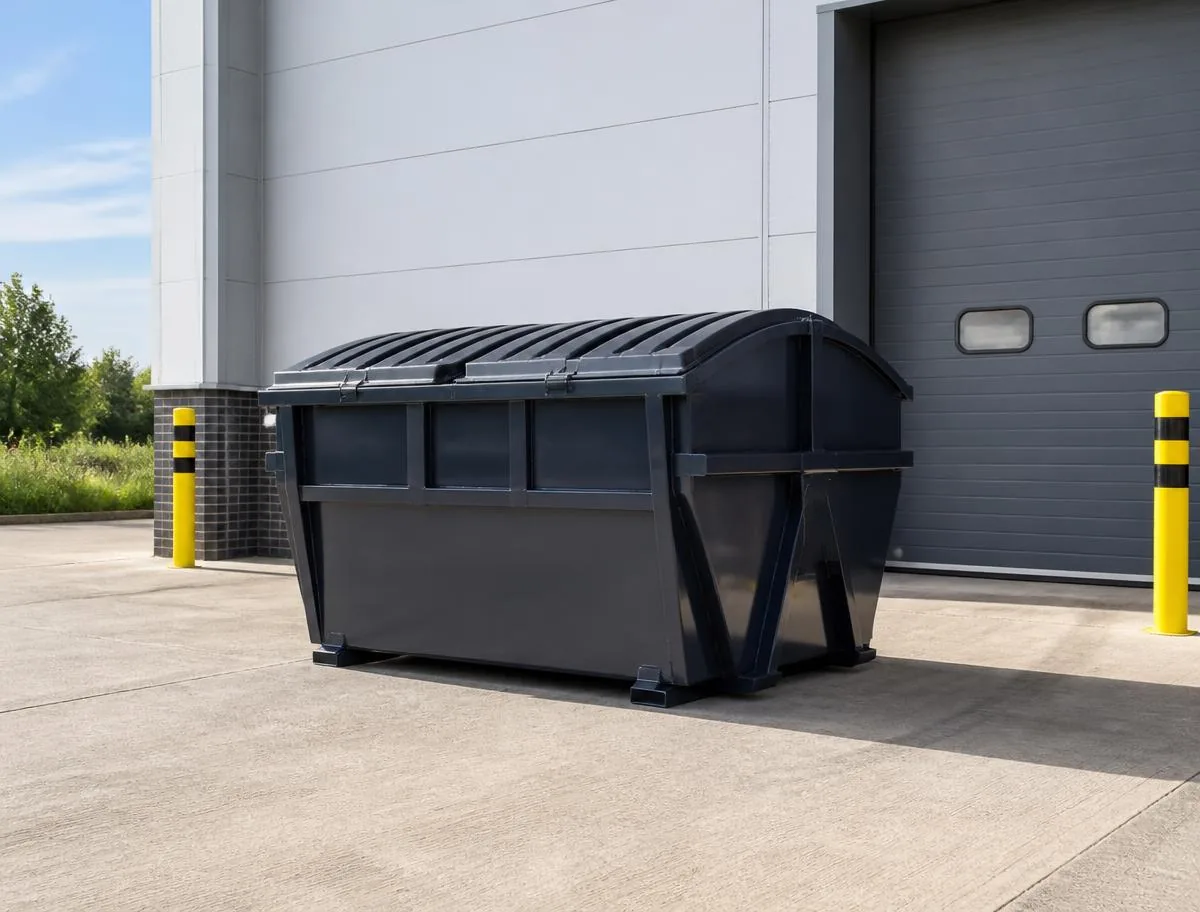
Visibility Across a Mixed Waste and Recycling Container Fleet
Skips
Open and enclosed skips distributed between depots, construction sites and commercial customers.
Discuss these assetsRoll-on roll-off containers
High-value RoRo and hook-lift assets serving industrial and high-volume waste streams.
Discuss these assetsCommercial bins
Front-end loader, rear-end loader and larger trade-waste bins requiring site and fleet visibility.
Discuss these assetsCompactors
Static and portable compactors where location data may be combined with service or fill-related inputs.
Discuss these assetsRecycling cages and stillages
Mobile metal, plastic, cardboard or product-recovery assets shared across customer networks.
Discuss these assetsHazardous or specialist containers
Controlled containers requiring careful asset identity, location and workflow integration.
Discuss these assetsPortable sanitation and site-service assets
Reusable units and support assets distributed across temporary customer sites.
Discuss these assetsContainer attachments and ancillary equipment
Lids, frames, lifting accessories or supporting assets whose availability affects deployment.
Discuss these assets
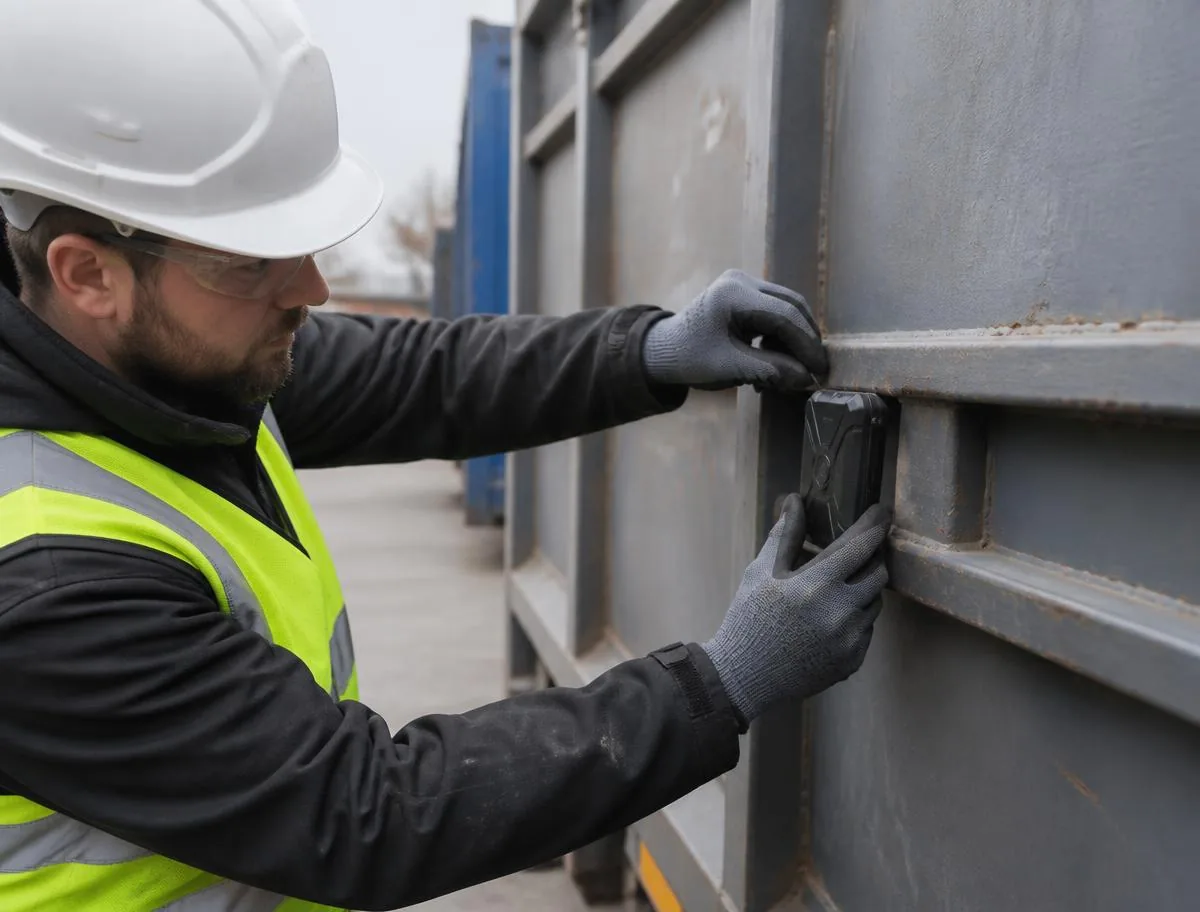
Tracker placement, metal shielding, impact exposure, pressure washing, waste type, hazardous-area requirements, lifting methods, stacking, expected life and radio coverage can materially affect solution design. Conduct a physical installation and operating-environment review before rollout.
Define the required outcome
Location, Fill, Service and Custody Are Related - but Not the Same
Where is the container?
- Required evidence
- Recent position or zone detection
- What location tracking contributes
- Last location, movement and dwell
- What else may be needed
- Suitable coverage and reporting policy
Is it ready for collection?
- Required evidence
- Fill or customer request
- What location tracking contributes
- Location and time at site
- What else may be needed
- Fill sensor, customer signal or workflow status
Was it serviced?
- Required evidence
- Confirmed lift, exchange or collection event
- What location tracking contributes
- Movement pattern may support the record
- What else may be needed
- Driver workflow, vehicle system, RFID/lift event or proof of service
Who is responsible for it?
- Required evidence
- Contract and custody record
- What location tracking contributes
- Journey and site history
- What else may be needed
- CRM, contract, hire or asset-management integration
A strong design starts with the operational decision, not the device. Some operators need reliable site-level inventory and dwell alerts. Others need a richer workflow combining tracking with fill monitoring, service events, customer records or route systems.
Do not use movement as automatic proof of collection. A container can move within a customer site or depot without completing the intended service.
Solution architecture
Match the Tracking Method to Asset Value, Coverage and Required Detail
Autonomous cellular/GNSS tracker
- Best suited to
- Higher-value containers moving across open regional networks
- Strengths
- Independent outdoor location and wide-area reporting
- Important trade-off
- Battery life depends on reporting, coverage and movement behaviour
BLE tag plus gateways
- Best suited to
- Larger fleets within controlled depots or customer locations
- Strengths
- Lower per-asset cost and useful zone-level visibility
- Important trade-off
- Visibility depends on gateway or compatible receiver coverage
Depot and yard gateways
- Best suited to
- Inventory and movement through known facilities
- Strengths
- Automated presence and zone detection
- Important trade-off
- Does not provide continuous visibility away from instrumented sites
Hybrid architecture
- Best suited to
- Mixed fleets crossing depots, customers and open networks
- Strengths
- Balances detail, coverage and unit economics
- Important trade-off
- Requires careful device, data and workflow design
Outdoor GNSS may work well for open sites, while metal enclosures, stacking and buildings can reduce location or communication performance. Wi-Fi positioning, cellular observations, Bluetooth zones or gateway detections may complement GNSS where exact satellite positioning is unavailable or unnecessary.
The word "live" must not be used without qualification. The platform shows the latest successfully reported information under the configured reporting policy and available coverage.
Design for the operating life
Long Battery Life Comes From Reporting the Events That Matter
Unpowered waste containers need tracking hardware that can remain installed through long operating cycles. Battery life is influenced by reporting frequency, movement, temperature, signal strength, failed connection attempts, GNSS acquisition, sensor use and the chosen device.
For many container fleets, the goal is not second-by-second tracking. A better policy may combine:
- a location after meaningful movement;
- scheduled health or inventory reports;
- arrival and departure from defined sites;
- prolonged dwell alerts;
- unexpected movement events;
- battery and communication-health monitoring.
This event-led model can provide useful operational visibility without imposing the power consumption and data volume of vehicle telematics.
Any battery-life statement must be presented as an estimate under defined configuration and operating assumptions—not as a universal guarantee.
From map to action
Turn Container Data Into Decisions for Operations and Customer Service
Depot inventory
See which tracked assets are present, recently moved or absent from an expected location.
Customer-site dwell review
Identify containers remaining at a customer or project longer than an agreed operational threshold.
Unexpected movement
Flag movement outside expected times or away from an authorised zone for investigation.
Fleet availability
Support deployment decisions with a more current view of where potential stock is positioned.
End-of-contract recovery
Locate assigned assets and prioritise recovery when a hire, project or service agreement ends.
Asset history
Review movement and dwell records when resolving discrepancies or improving container flows.
An alert should lead to a defined owner and action. Avoid generating notifications that no team is responsible for reviewing. During a pilot, specify who receives each exception, what they check and how the outcome is recorded.
Connect the operation
Keep the Business System as the System of Record
The tracking platform can provide asset identity, last location, movement, dwell, battery and device-health events. Container ownership, customer allocation, contract status, waste classification, service instructions and invoicing will often remain in the operator's existing systems.
Depending on the project, useful integrations may include:
- waste-management and service platforms
- transport management and route systems
- CRM and customer-service records
- ERP, billing and hire systems
- EAM or asset registers
- driver applications and proof-of-service workflows
- fill-level, weight or compactor telemetry
- Step 1
Tracker or tag
- Step 2
- Step 3
Operational rules
- Step 4
Waste, route or asset system
Illustrative integration architecture; final design depends on the customer’s systems and workflow.
Claims with discipline
Use Tracking Evidence Without Overstating It
Recent position at a customer site
- Reasonable conclusion
- The tracker last reported from that site
- Do not assume
- The customer still has legal custody now
Movement away from a geofence
- Reasonable conclusion
- The asset appears to have left the defined area
- Do not assume
- A scheduled collection was completed correctly
Prolonged dwell
- Reasonable conclusion
- The asset has remained within the location threshold
- Do not assume
- It is unused, empty or commercially off-hire
No recent report
- Reasonable conclusion
- Current data is unavailable or delayed
- Do not assume
- The container has been stolen or the tracker has failed
Repeated movement
- Reasonable conclusion
- The asset is physically active
- Do not assume
- It is delivering productive utilisation or revenue
Sensor threshold event
- Reasonable conclusion
- The configured sensor recorded a threshold condition
- Do not assume
- Waste composition or regulatory compliance is confirmed
Solution fit
Is Connected Container Tracking the Right Approach?
Strong fit
- Containers are reusable, distributed and operationally important.
- Assets frequently spend time away from owned depots.
- Manual inventory or customer-site records are unreliable or labour-intensive.
- Loss, excess dwell or poor positioning creates measurable cost.
- Site-level or event-led visibility is sufficient for the decision.
- The business can assign owners and actions to alerts and exceptions.
- Hardware can be mounted safely and remain in service through normal handling.
Another approach may be better when...
- The requirement is only to identify a bin when a truck lifts it; RFID or vehicle-based identification may be sufficient.
- Second-by-second vehicle navigation is the main need; use fleet telematics.
- Fill level is the only required outcome; assess a dedicated fill-sensing solution.
- The asset value and operational impact cannot justify hardware, connectivity and process costs.
- The environment prevents safe or durable installation.
- The business has not defined an operational response to the information.
- The expectation is that location data alone will prove service, custody or compliance.
Build the business case
Measure the Cost of Poor Visibility Before Choosing Hardware
- 01
Annual replacement and hire cost
Containers purchased or hired because assets are lost, damaged or apparently unavailable.
- 02
Average customer-site dwell
Time between deployment and recovery, exchange or confirmed ongoing requirement.
- 03
Depot and reconciliation labour
Hours spent counting, searching and resolving discrepancies.
- 04
Fleet availability
The proportion of assets genuinely available where new demand occurs.
- 05
Recovery performance
Time and success rate for locating assets at contract end or after an exception.
A credible return model should compare the fully loaded cost of trackers, installation, connectivity, platform use, support and operational change against achievable improvements in recovery, dwell, search effort, emergency hire and fleet size.
Do not promise a universal percentage reduction. Establish the baseline from the operator's own records and validate improvement during a controlled deployment.
Start with a defined operational question
Prove the Workflow Before Scaling Across the Fleet
A useful pilot should test the physical environment, reporting behaviour and operational response - not merely whether a dot appears on a map.
- 01
Select one fleet and operating flow
Choose a defined container type, depot, customer group or region.
- 02
Capture the baseline
Record current loss, dwell, search effort, availability and recovery performance.
- 03
Define decision-level requirements
Agree the necessary location precision, reporting timing, alerts and integrations.
- 04
Test installation
Validate mounting, radio performance, impact exposure, washing, stacking and maintenance access.
- 05
Assign operational responses
Decide who owns dwell, movement, missing-report and battery exceptions.
- 06
Run through real cycles
Include depot, transport, customer-site and return activity where possible.
- 07
Review evidence and rollout economics
Compare outcomes with the baseline and model fleet-scale costs and benefits.
Pilot success measures
- useful detections across the chosen operating flow;
- acceptable tracker retention and physical durability;
- manageable alert quality and response workload;
- reduced time spent locating or reconciling assets;
- identification of recoverable dwell or misplaced containers;
- evidence sufficient for a defensible rollout decision.
We do not present a fixed pilot pack or price unless Strategic Tracking has approved a standard commercial offer.
Independent solution design
Select the Architecture Around the Operation - not a Preferred Device
Strategic Tracking helps organisations translate a container-control problem into a practical tracking requirement. We consider the asset, physical environment, network coverage, reporting need, operating workflow, integration route and commercial case before recommending an approach.
Strategic Tracking is an independent specialist. We do not manufacture hardware and we are not the exclusive supplier of any vendor. Where tracking is not the right answer - or another technology is a better fit - we will say so.
How we support projects
Vendor-neutral assessment
Compare autonomous trackers, tags, gateways, sensors and platform options.
Operational qualification
Define what the data must support and where another system remains authoritative.
Pilot planning
Establish success measures, installation checks and ownership of exceptions.
Scalable architecture
Consider mixed fleets, multiple depots, customer sites and integration from the outset.
Waste Container Tracking Questions
What is waste container tracking?
Can a GPS tracker be fitted to a skip or metal container?
Does container tracking show whether a skip or bin is full?
Can unpowered waste containers be tracked for several years?
Is waste container tracking live?
Can tracking confirm that a collection took place?
What alerts can be used?
Can container data integrate with waste-management software?
What is the difference between waste container tracking and vehicle telematics?
How should a container-tracking pilot be planned?
Explore Related Asset Tracking Solutions
Industrial asset tracking solutions
The parent hub covering asset tracking across industrial operations, technologies and use cases.
Visit the hubLong-life tracking for non-powered assets
Autonomous tracking trade-offs for assets without onboard power.
Non-powered asset trackingTrailer and container tracking
Trailers, containers and swap bodies moving between depots, customers and networks.
Trailer and container trackingReturnable asset tracking
Pallets, crates, cages and returnable packaging circulating through supply chains.
Returnable packaging tracking
Turn a Distributed Container Fleet Into a Visible Operational Asset
Tell us what you need to track, where the containers operate and which visibility problem you want to solve. Strategic Tracking will help identify suitable technologies and suppliers for your environment.
Independent assessment | Practical technology selection | No obligation to choose a particular supplier