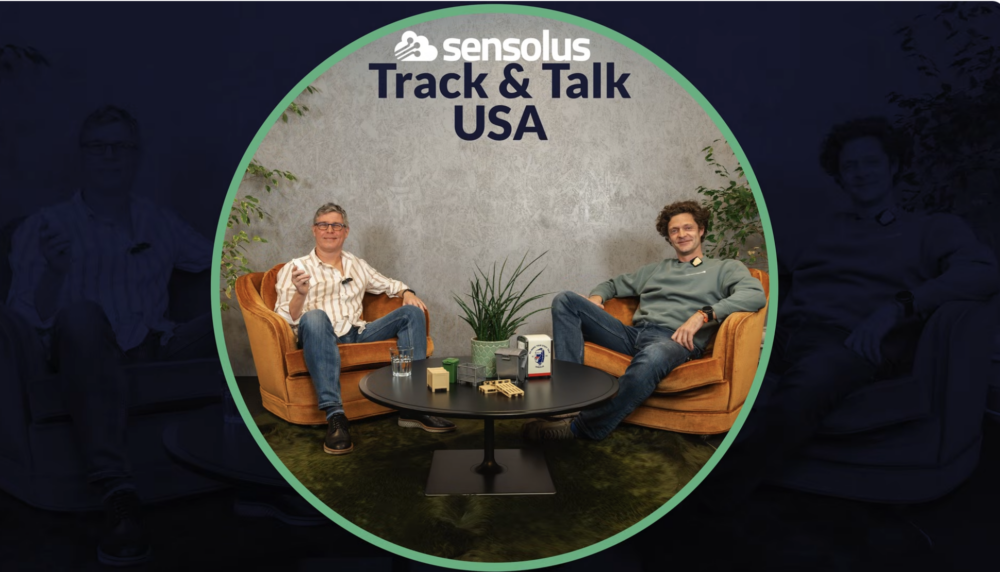
I recently watched Sensolus CEO Kristoff Van Rattinghe sit down with Steve Logue, the company’s US General Manager, for an episode of their “Track and Talk”series covering two years of building the business in the US, Canada and Mexico.
Full disclosure: Sensolus is one of my partners at Strategic Tracking, so treat this as an interested party’s take, not a neutral product review. What follows isn’t a pitch for Sensolus specifically, it’s a set of patterns any enterprise buyer evaluating a tracking or IoT vendor should be paying attention to, and this conversation happened to lay them out cleanly.
1. “0.1 to 1,” not “0 to 1” — the smartest vendors don’t start cold
Steve was clear that Sensolus didn’t launch in the US from scratch. They leveraged existing European customer relationships including Airbus and Veolia and extended those partnerships across the Atlantic to get a running start.
If you’re evaluating a tracking vendor’s US or regional presence, ask this directly: are they building genuinely new customer relationships, or leaning on an established global account they already serve elsewhere?
Neither answer is disqualifying, but it changes what “two years in market” actually means in terms of proven local delivery.
2. Hardware still has to survive the real world
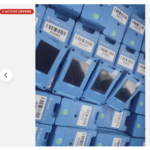
One of the more revealing moments: Sensolus discovered their original black trackers underperformed in US heat, and had to switch to white housings to protect battery life. It’s a small detail, but it’s a useful reminder for any buyer tracking technology isn’t just a software and connectivity decision. Environmental conditions, deployment climate, and physical durability materially affect performance.
If a vendor can’t speak to how their hardware has been adapted for your specific operating environment, that’s worth probing before you commit to a pilot.
3. Use cases now flow in both directions
Sensolus mentioned a “parent-child” tracking use case a tracker on a toolbox or container, paired with Bluetooth tags on the individual assets inside that emerged in the US market and is now being taken back to Europe.
This matters because it signals a vendor with genuine product-market feedback loops, not just a single playbook rolled out identically everywhere.
When you’re assessing a partner, it’s worth asking where their most recent innovation actually came from, and whether it’s been shaped by real deployments rather than a head-office roadmap.
4. 2026 is being called “the year of the partner” and that’s an industry-wide shift, not just a Sensolus line
Sensolus said they’ve moved from largely direct sales to actively building out a partner channel, with roughly half a dozen partners now in play.
This tracks with what I’m seeing more broadly across the tracking and IoT space: vendors recognising that specialist, vendor-neutral intermediaries can qualify buyers and shorten sales cycles more effectively than direct enterprise selling alone.
If you’re a buyer, this is good news it usually means more structured evaluation support, and often faster access to the right vendor for your specific use case rather than a one-size-fits-all pitch.
5. Fast-growing vendors wrestle with centralisation — and how they resolve it tells you something
Kristof was refreshingly candid that early autonomy and localisation, while necessary to move fast, had to be partially walked back.
Sensolus has since recentralised marketing and collections activities to build repeatable, scalable operations.
This is a useful maturity signal for any fast-growing vendor: early-stage flexibility is good, but if a vendor can’t show you how they’ve since built repeatable, consistent processes across markets, that’s a fair question to raise before scaling a relationship with them particularly if you’re a multinational buyer needing consistent service across regions.
The bigger picture:none of this is unique to Sensolus. It’s a fairly honest account of what building out a US operation actually looks like for a European IoT vendor brand awareness struggles, hardware surprises, channel strategy shifts, and organisational growing pains included.
Strategic Tracking works with enterprise buyers across pharmaceutical, logistics, manufacturing, automotive and food & beverage sectors to identify the right tracking and IoT partners for their specific use case, Sensolus included, alongside several others.