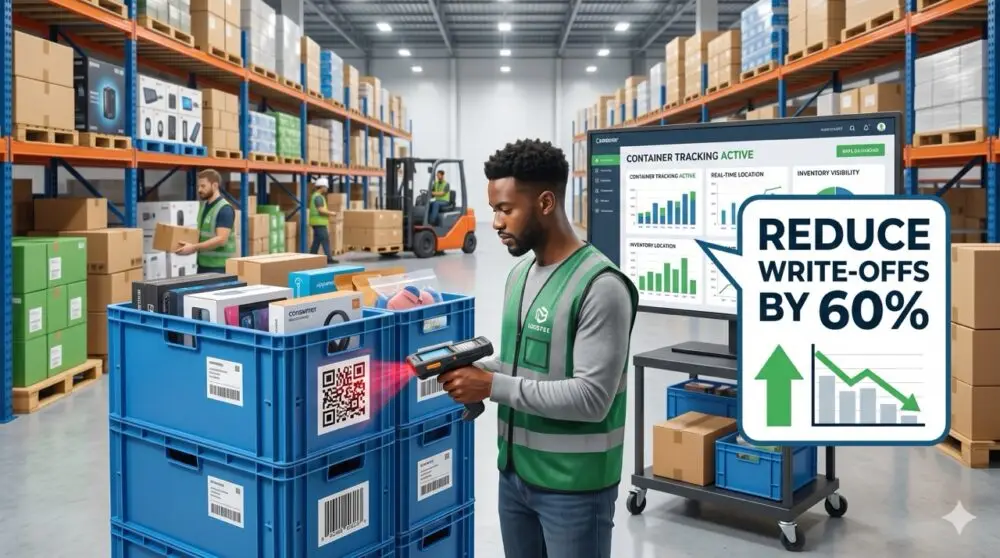
Grocery supermarkets and fashion retailers lose £2M-£8M annually from returnable plastic totes, roll cages, and display units disappearing into supplier networks, competitor operations, and unauthorized disposal. Tesco, Sainsbury’s, and Marks & Spencer managing 500,000-3M container pools report 15-20% annual shrinkage without tracking systems. RFID and GPS technologies reduce loss rates to 3-5% through automated depot scanning, supplier accountability, and theft recovery generating £1.5M-£6M annual savings for major retail chains.
Why do retail returnable containers disappear at such high rates?
Supplier detention represents 60-70% of total container loss. FMCG manufacturers receiving grocery deliveries in retailer-owned totes delay returns 30-90 days using packaging as free temporary storage. Unlike automotive tier 1 suppliers fearing account jeopardy from detention, small food producers view container retention as zero-cost inventory management. Tesco reports average 55-day dwell time at supplier sites designed for 7-day turnaround, effectively removing 8x more containers from circulation than planned requiring proportionally larger pool investment.
Cross-contamination between retailer pools causes permanent loss. Sainsbury’s totes accidentally delivered to Tesco distribution centers enter incompatible return networks never returning to origin. Visual sorting by depot workers fails to identify subtle branding differences between nearly-identical grey plastic containers. Major grocers report 3-6% annual loss simply from mixing between competing retail pools supposedly separated through color-coding and logo embossing proving insufficient without automated identification.
Unauthorized disposal at store level eliminates containers perceived as damaged or dirty. Store managers facing space constraints discard containers rather than arranging reverse logistics pickup. Chilled/frozen totes contaminated with spoiled product get binned rather than cleaned due to labor costs exceeding perceived container value. Retailers discover through tracking that 8-12% of ‘lost’ containers were intentionally disposed by their own staff avoiding cleaning or storage responsibilities.
What tracking technology works best for different container types?
Container Type | Recommended Technology | Cost per Container | Read Range |
Plastic totes (500k+ pool) | Passive UHF RFID | £0.15-0.40 | 3-8 meters |
Roll cages (50k+ pool) | Active RFID + GPS hybrid | £25-60 | 30-100 meters (active RFID) |
Display fixtures (1k-10k pool) | GPS trackers | £80-150 | Unlimited (cellular) |
Passive UHF RFID suits high-volume grocery tote pools where £0.15-0.40 per-container cost scales economically across 500,000-3M units. Tags embedded during manufacturing survive 500-1,000 trips through automated washing systems. Portal readers at distribution center docks, supplier receiving areas, and store back doors create automatic check-in/check-out logging without requiring staff scanning unlike barcode systems introducing labor costs and compliance failures from missed scans.
Active RFID with GPS backup tracks roll cages moving between store deliveries and depot returns. Fashion retailers transporting hanging garments on wheeled cages worth £180-350 each justify £25-60 tracking investment. Battery-powered active RFID provides 30-100 meter read range enabling automated yard tracking as cages enter/exit facilities, while cellular GPS backup identifies containers stranded at closed retail locations or diverted to unauthorized sites.
GPS tracking suits promotional display fixtures worth £800-£2,500 each deployed to stores for seasonal campaigns. Beverage manufacturers placing branded fridges, electronics retailers loaning demonstration units, and cosmetics companies providing counter displays use GPS preventing permanent loss to store conversions, competitor acquisition, or unauthorized disposal. Real-time location enables recovery within 48-96 hours versus 6-12 month discovery delays through manual audits.
VENDOR SELECTION CRITERIA
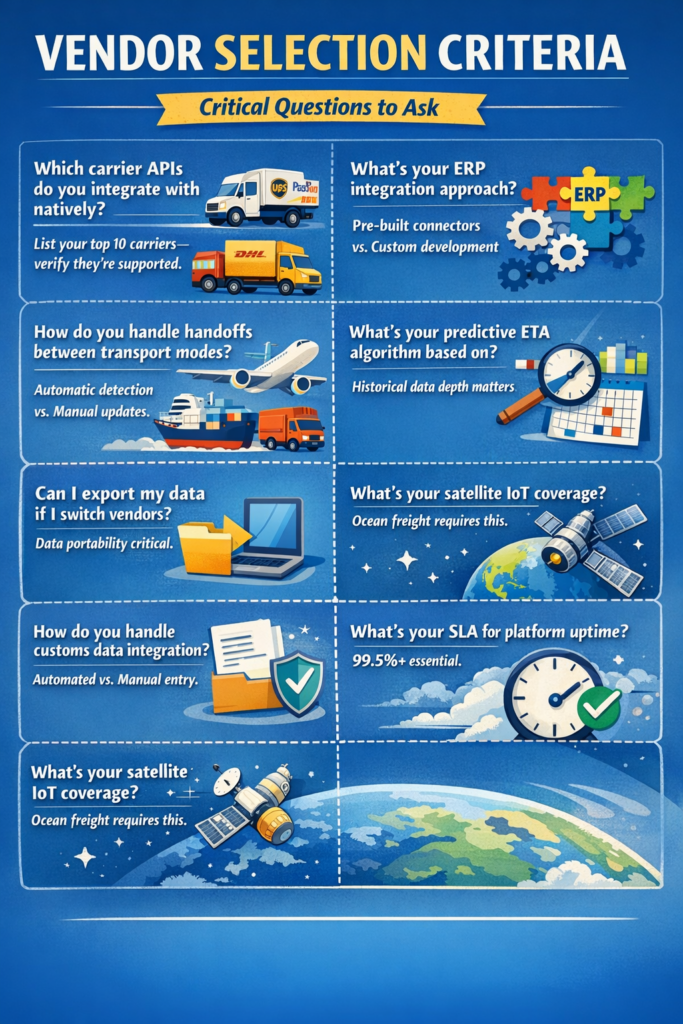
Find out more about selecting vendors in our new 2026 guide to visibility platforms.
Based on 20+ years experience of implementing 100s of GPS tracking projects, and IOT temperature monitoring systems we have written this easy-to-read best practice guide and checklist to help you plan and implement GPS tracking and realtime visibility solutions.
Download Your Free 2026 Guide Here
How do grocers enforce container return compliance with suppliers?
Deposit systems create financial incentive for prompt returns. Suppliers pay £5-15 deposit per tote refunded upon verified return within 14 days. Unlike detention fees penalizing slow returns, deposits convert containers into supplier financial liability encouraging proactive management. Tracking systems automate deposit refund processing reducing administrative overhead from £8-15 per transaction requiring manual verification to fully automated settlement based on RFID/GPS scan data.
Supplier scorecarding incorporates container return performance into vendor evaluation. Major grocers include packaging cycle time metrics in quarterly business reviews alongside quality, pricing, and delivery performance. Suppliers consistently exceeding 14-day average return time receive warning letters, reduced shelf space allocation, or exclusion from new product ranging. Tracking data provides objective performance measurement preventing supplier disputes claiming containers were returned when depot scanning proves otherwise.
Automated detention invoicing charges suppliers £3-8 daily after grace period expires. Tesco and Sainsbury’s implementing automated billing based on RFID tracking data increased collection rates from 65% to 92% within 6 months. Previous manual invoicing taking 60-90 days to process lost deterrent effect. Real-time tracking enables detention invoicing within 24-48 hours of threshold breach creating immediate financial consequence encouraging faster supplier action.
What ROI do fashion retailers achieve from roll cage tracking?
- Baseline: 20,000 roll cage pool @ £250 each = £5M inventory value
- Annual loss rate without tracking: 18% = 3,600 cages = £900,000
- Active RFID + GPS tracking investment: £40 per cage × 20,000 = £800,000
- Annual platform/data fees: £60,000 (£3 per cage)
- Annual loss rate with tracking: 4% = 800 cages = £200,000
- Annual savings from reduced loss: £900,000 – £200,000 = £700,000
- Additional: Eliminated emergency cage purchases (20% premium) = £40,000
- Additional: Depot labor reduction from automated scanning (120 hours monthly @ £15/hour) = £21,600
- Total annual benefit: £761,600
- First-year net benefit: £761,600 – £800,000 – £60,000 = -£98,400 (including capital investment)
- Subsequent years: £761,600 – £60,000 = £701,600 annual benefit
- Payback period: 14 months | 3-year ROI: 178%
This calculation excludes additional benefits from improved cash flow (reduced working capital tied in excess container inventory), faster depot throughput (automated scanning processes 200 cages/hour versus 40 cages/hour manual), and enhanced supplier relationships through objective performance data replacing accusatory phone calls about missing containers.
How does grocery tote tracking reduce supply chain labor costs?
Automated portal scanning eliminates manual depot check-in/check-out processes consuming 15-25 hours daily across large distribution operations. Traditional systems require workers scanning barcodes on individual containers as trucks arrive and depart. RFID portals automatically reading 200-400 containers per truck in 3-5 minutes (versus 20-40 minutes manual scanning) recover 80-120 labor hours daily at busy depots. This automation saves £300,000-£600,000 annually across 4-8 depot network at £15-20/hour warehouse wages.
Inventory reconciliation automation reduces finance/operations overhead from 40-60 hours weekly per region to 2-4 hours monthly. Manual systems require operations analysts compiling Excel spreadsheets from depot scan logs, supplier reported returns, and store delivery records identifying discrepancies. Automated tracking platforms provide real-time dashboards showing container location eliminating investigative labor. One major grocer reduced regional logistics staff by 15% (8 FTE across 6 regions) through RFID automation.
Supplier dispute resolution accelerates from 15-30 days to 24-48 hours through objective tracking data. Grocers and FMCG manufacturers traditionally argue for weeks over container return accountability with both parties claiming returns completed versus received. RFID scan logs timestamping exact delivery and pickup events eliminate debate enabling immediate resolution. Finance teams report 70-85% reduction in time spent on packaging disputes worth £25,000-£60,000 annual labor savings per major supplier relationship.
Which retailers achieve fastest payback from container tracking?
Grocers operating fresh produce and chilled food categories see 8-14 month payback through reduced cold chain waste. Unlike ambient products tolerating supply chain delays, fresh produce requires rapid tote circulation preventing spoilage from containers stranded at suppliers. Automated tracking enabling 7-day versus 35-day circulation reduces fresh product waste 12-18% through faster store replenishment. A top-4 UK grocer attributes £2.8M annual shrinkage reduction to improved container velocity enabled by RFID tracking.
Fashion retailers cycling seasonal collections achieve 10-16 month payback through display fixture recovery. High-street chains deploying 5,000-15,000 promotional fixtures annually (mannequins, signage frames, display tables) lose 25-35% to store retention, competitor acquisition, or disposal. GPS tracking with automated recovery workflows reduces loss to 6-9% recovering £180,000-£450,000 annually across 300-500 store estate. This prevention justifies £400,000-£800,000 tracking investment within 12-18 months.
Online grocery operations see 6-10 month payback from delivery tote optimization. Ocado, Tesco, and Sainsbury’s home delivery services cycling 100,000-300,000 totes through packing stations, delivery vans, and customer doorsteps achieve 40-60% faster circulation through GPS tracking. Real-time visibility enables dynamic route optimization ensuring vans collect totes from customers during subsequent delivery runs rather than dedicated collection trips. This efficiency improvement reduces tote pool requirements 25-35% avoiding £1.2M-£3.5M additional capital investment.
What integration capabilities determine retail tracking success?
WMS integration automates container inventory reconciliation within SAP, Manhattan Associates, or Blue Yonder warehouse systems. RFID portal scan data automatically updates container location in WMS eliminating manual entry. This integration enables dynamic allocation algorithms directing containers to outbound loads based on real-time availability versus static allocation assuming containers return on schedule. Grocers report 15-20% improvement in container utilization through WMS integration reducing total pool requirements.
Supplier portal access creates transparency reducing disputes and improving return compliance. Web dashboards showing suppliers their current container holdings, detention days accrued, and deposit status encourage proactive returns. Self-service portals reduce phone call volume to logistics teams by 60-75% as suppliers access real-time data answering their own questions. Leading grocers report 18-25% improvement in supplier return rates after portal implementation attributed to increased visibility.
Transport management system integration optimizes reverse logistics collection routes. TMS platforms like Descartes, Oracle Transportation Management, or Manhattan TM using container location data dynamically schedule supplier collections minimizing empty running. This optimization reduces dedicated collection vehicle miles 25-40% consolidating returns from multiple suppliers onto single collection runs versus individual pickups. One major grocer saved £280,000 annually in logistics costs through TMS-integrated container tracking.
Implementation roadmap for retail container tracking
- Month 1-2: Conduct container audit – count existing inventory, assess loss rates, identify high-value pools
- Month 3: Evaluate RFID vs GPS based on container value, pool size, and circulation patterns
- Month 4-5: Pilot 10,000-20,000 containers through single depot with 50-100 suppliers
- Month 6: Measure pilot results – loss rate reduction, depot labor savings, supplier compliance improvement
- Month 7-9: WMS/TMS integration development and testing
- Month 10-15: Full network rollout across remaining depots and container pools
- Month 16+: Optimization using historical circulation data and predictive analytics
Resource requirements: Supply chain manager (30% FTE for 12 months program management), IT integration specialist (25% FTE for WMS/TMS integration), depot operations leads (15% FTE each for rollout coordination). Total internal labor: 400-600 hours spread across 12-15 month implementation.
Strategic Tracking connects grocery, fashion, and consumer goods retailers with pre-vetted returnable container tracking vendors specializing in RFID, GPS, and hybrid solutions. Our vendor-agnostic consultancy evaluates pool size, container value, and circulation patterns to recommend optimal technology balancing capital investment with shrinkage reduction.