
Product Diversion & Channel-Control Consultancy
Detect Product Diversion and Understand Where Channel Leakage Occurs
Strategic Tracking helps brand owners and manufacturers investigate how genuine products move outside intended distribution channels. We combine carefully planned tracking technology, supply-chain data and human analysis to produce clearer, evidence-led findings.
- Independent advice
- Discreet project handling
- Technology selected around the investigation
No-obligation initial discussion. We agree scope, confidentiality and a proportionate first step before any testing begins.

Requirements led
The investigation starts with the commercial question, not a preferred tracking device.
Evidence aware
Location events are assessed alongside orders, identifiers, handovers and other corroborating information.
Vendor independent
Suitable hardware, connectivity and software are selected for the route, product and operating constraints.
Confidential by design
Access, reporting, data retention and stakeholder involvement are agreed before testing begins.
Product Diversion Is a Channel Problem, Not Just a Tracking Problem
Product diversion occurs when genuine products move into customers, territories or sales channels other than those intended by the brand owner or agreed within the commercial network. It may involve a distributor, wholesaler, retailer, intermediary or another point in a complex chain - but an unexpected product location does not, by itself, identify who was responsible or prove a contractual breach.
Parallel imports are also not synonymous with counterfeit goods. They generally concern genuine products traded outside the manufacturer's chosen distribution route, and their legal treatment varies by market, product category and circumstances. Legal advisers should determine what rights or remedies may apply. Strategic Tracking's role is to help clients design proportionate tests, collect reliable operational data and understand what that data does and does not support.
The objective is not merely to place a tracker in a shipment. It is to frame the right question, create a controlled test and combine multiple sources of evidence before reaching a conclusion.
Terms used precisely on this page
- Product diversion
- Genuine products moving into channels, customers, territories or uses other than those intended by the brand owner or agreed commercially.
- Channel leakage
- A broader operational term for product moving outside the planned or authorised distribution route, whether by deliberate resale, weak controls, error or poor data.
- Parallel imports
- Genuine goods imported and resold outside the manufacturer's chosen distribution network. Their legal status depends on territory, product sector, IP exhaustion and other facts.
- Grey-market goods
- A common commercial term for genuine goods sold outside intended channels. It does not imply that all such trade is unlawful.
- Counterfeit goods
- Goods falsely presented as genuine. Counterfeit investigation requires different authentication, legal and enforcement measures.
- Theft or cargo crime
- Unauthorised taking of goods. A theft investigation is not automatically a product-diversion engagement.
When Should a Brand Investigate Possible Channel Leakage?
Products appear in an unexpected market
Genuine products are offered in countries, regions or channels not supplied through the planned route.
Marketplace pricing becomes difficult to explain
New sellers repeatedly offer authentic-looking stock at prices inconsistent with the authorised channel.
A customer's purchases exceed expected local demand
Ordering patterns suggest that some volume may be moving beyond the declared customer or territory.
Serial, batch or warranty records do not align
Identifiers, service claims or returns reveal products in unexpected places or with incomplete provenance.
Promotions or discounted stock appear elsewhere
Products supplied for a specific programme, account or territory surface in another commercial context.
The distribution chain has blind spots
Ownership and handover data become unclear after sale to an intermediary, making anomalies difficult to test.
Each signal has possible innocent explanations. The first task is to define the hypothesis, available evidence and decision that the investigation needs to support.
What Can Tracking Technology Contribute?
A well-designed tracker deployment can add time-stamped location and event data to a controlled investigation. It is most useful when the test unit, intended route, expected handovers and response plan are known in advance.
Tracking and traceability data may help show
- That a test shipment or tagged item reached an unexpected location
- The timing and sequence of movement or dwell events
- Whether the observed route differed from the planned route
- Whether a package was opened, illuminated or subjected to an event, where suitable sensors are fitted
- Whether stored readings uploaded after a connectivity gap
- A record for further investigation and corroboration
It does not automatically prove
- Who made the diversion decision
- Ownership, custody or contractual liability at every moment
- That a contract, law or IP right was breached
- Why that event occurred or who caused it
- Continuous live visibility throughout the journey
- A complete chain of evidence on its own
Tracker data should be reviewed with serial or batch identifiers, sales records, invoices, customer information, carrier events, test-purchase evidence and relevant observations. Legal teams should advise on admissibility, contractual rights, privacy and any intended enforcement action.
A Structured Approach to Diversion Detection and Channel Control
Every project is adapted to the product, channel, territory and level of risk. A typical engagement follows seven stages.
- 1
Define the commercial question
Clarify what has been observed, which routes or accounts are in scope, what alternative explanations exist and what decision the client needs to make.
Typical output: Agreed investigation question, scope, assumptions and success criteria.
- 2
Map the authorised channel
Document expected product flows, customers, intermediaries, handovers, territories, identifiers and known information gaps.
Typical output: Current-state channel map and list of priority blind spots.
- 3
Assess legal, privacy and operational constraints
Confirm with the client's advisers that the proposed test is lawful and proportionate. Agree data access, stakeholder knowledge, retention, device handling and escalation rules.
Typical output: Approved test protocol and governance plan.
- 4
Design the test and select technology
Choose representative products or shipments, device form factor, location method, reporting pattern, battery life, sensors, concealment or attachment approach and platform configuration.
Typical output: Test design, device specification, expected route and event rules.
- 5
Deploy and monitor
Activate and verify the devices, record test-unit identifiers, monitor according to the agreed protocol and preserve a clear audit trail of actions and observations.
Typical output: Event log, platform data and contemporaneous investigation notes.
- 6
Corroborate and analyse
Compare tracker events with transaction records, product identifiers, marketplace observations, carrier data, known facilities and other reliable sources. Document uncertainty and competing explanations.
Typical output: Evidence-led findings report with confidence levels and limitations.
- 7
Recommend controls and next steps
Identify practical measures such as tighter channel data, serialisation, exception alerts, revised audit points, repeat testing or a broader monitoring programme. Legal or commercial action remains the client's decision.
Typical output: Prioritised control plan and options for continued monitoring.
The Right Evidence Usually Comes from More Than One System
Strategic Tracking selects technology around the investigation rather than treating a GPS device as a universal answer. The most useful programme may combine physical tracking, product identification, sales data and marketplace intelligence.
| Method | Useful for | Important limitations |
|---|---|---|
| Cellular/GNSS tracking device | Periodic in-transit location, dwell and movement events across wider areas | Communication depends on coverage and device environment; GNSS may be weak indoors or inside metal structures |
| Wi-Fi or cellular positioning | Additional location evidence where GNSS is unavailable | Accuracy varies and may identify an approximate rather than exact location |
| BLE tag or beacon | Detecting proximity to compatible gateways or phones in a designed ecosystem | A beacon alone does not provide global live tracking; infrastructure and detection participation matter |
| Light, tamper or opening sensor | Indicating that packaging may have been opened or exposed to light | The event does not identify the person or reason and must be interpreted in context |
| Serialisation, batch or unit identifier | Linking observed goods to production, customer or shipment records | Data quality and consistent scanning are essential; identifier evidence is not the same as live location |
| Carrier and order data | Establishing declared movements, handovers and commercial context | Only reflects events recorded in the relevant systems |
| Test purchase and marketplace review | Confirming product availability, seller claims, identifiers and packaging | Must follow an approved, lawful protocol and may not reveal the upstream source by itself |
| Visibility platform and API | Bringing events together, setting permissions and creating a reviewable timeline | Integration does not correct weak source data or determine legal conclusions |
"Real time" should mean that a device attempts to transmit readings or events according to its configuration when connectivity is available. Devices may store data during network gaps and upload it later. We never promise continuous, precise or covert tracking in every environment.
Where several data sources must be brought together, see visibility platform integrations.
Typical Diversion and Brand-Control Scenarios
The following scenarios are illustrative. They describe how an engagement may be framed, not guaranteed outcomes.
Distributor or wholesaler leakage
A manufacturer sees products supplied to one account appearing elsewhere. A controlled test may help establish the route taken by selected units and identify where further records should be examined.
Unexpected ecommerce availability
Authentic-looking stock repeatedly appears through unauthorised marketplace sellers. Product identifiers, purchases, packaging evidence and targeted tracking may help develop a clearer source hypothesis.
Territorial channel movement
Products intended for one market surface in another. The engagement maps the expected chain, tests selected movements and records the operational evidence for legal and commercial review.
Promotional or discounted stock misuse
Goods supplied for a defined account, programme or end use are suspected of being resold. Serialisation, transaction analysis and controlled monitoring can help determine whether the concern warrants further action.
Concerned primarily about theft, tamper or cargo loss? Explore tracking for high-value and theft-sensitive goods. For broader retail channel visibility, see retail and ecommerce logistics. Controlled test shipments often use disposable shipment trackers.
What a Strategic Tracking Engagement Can Deliver
- Defined investigation question and scope
- Authorised-channel and information-gap map
- Technology and supplier evaluation
- Controlled test or pilot design
- Device provisioning and deployment guidance
- Alert, access and escalation protocol
- Consolidated event timeline
- Correlation with agreed operational data
- Findings, confidence levels and limitations
- Practical recommendations for channel controls
- Options for repeat tests, wider monitoring or platform integration
The precise deliverables are agreed before work begins. Sensitive findings are shared only with authorised stakeholders through the agreed reporting route. Scope depends heavily on product, geography, number of test units, technology, analysis and governance requirements, so we do not publish fixed pricing.
Independent Technology Selection with Commercial Context
A diversion investigation sits between commercial operations, logistics, technology and evidence. Strategic Tracking helps clients connect those disciplines without forcing every problem into a single device or platform.
Independent selection
We compare relevant devices, connectivity and software against the actual test rather than assuming one supplier fits every route.
Practical deployment experience
We consider activation, packaging, battery life, network behaviour, sensor settings, access permissions and the people who must act on events.
Analysis beyond map dots
We build a timeline and evaluate tracker events alongside the operational and commercial context supplied by the client.
Clear limitations
We distinguish observed data from inference and identify where further corroboration or specialist legal advice is required.

Matthew Holland
Founder, Strategic Tracking
Initial discussions are handled directly and confidentially. If a diversion concern is better served by broader technology evaluation, we will say so and point to our real-time visibility consultancy instead.
Evidence-Led Projects with Measurable Commercial Value
The following are genuine client comments, published with permission and with names withheld for commercial confidentiality. They describe individual project experiences, not a forecast of results.
We tracked first to a known diverter in the US and then cross-country to a large existing wholesaler customer. As a result, we will be ending our relationship with the customer we had sold to originally ... which will create thousands of dollars in margin improvement.
Verified client testimonial - name withheld for commercial confidentiality
We were able to narrow down and focus on specific shipments ... enabling us to shut down the diversion immediately and save our company a significant amount of money.
Verified client testimonial - name withheld for commercial confidentiality
Organisations we have supported


Investigation Governance Matters as Much as Device Selection
Product diversion and parallel trade can involve contractual, intellectual-property, employment, privacy, customs and sector-specific questions. Their treatment differs between jurisdictions. Strategic Tracking provides technology and operational consultancy, not legal advice.
Before deployment, the client should obtain appropriate legal and data-protection advice, establish a lawful purpose for processing, limit access to authorised people, define retention and deletion, and agree how findings will be recorded and used. Where location data may relate to identifiable individuals, vehicles or working patterns, additional privacy obligations may apply.
Tracking data is one source of operational evidence. It should not be used to accuse an individual or organisation without corroboration and appropriate legal review.
Product Diversion and Parallel Imports: Frequently Asked Questions
What is product diversion?
Are parallel imports illegal?
Is product diversion the same as counterfeiting?
Can a GPS tracker prove which distributor diverted a product?
Will a tracking device report continuously?
Can you track individual products as well as cartons or pallets?
Do you provide covert tracking devices?
How long does an investigation take?
What happens if the data indicates an unexpected destination?
Can you help us improve controls after the investigation?
Discuss a Product Diversion Concern in Confidence
Tell us what you have observed, which channels or territories are involved and what decision you need the evidence to support. We will help you define a proportionate first step.
Please avoid submitting legally privileged, highly sensitive or accusatory material through a general web form. We can agree an appropriate information-sharing route after initial contact.
Already know the tracking-device specification and quantity you need? Request a Quick Quote.

Tracking Tuesday: When Shipment Visibility Becomes a Cyber Risk
Satellite connectivity extends shipment visibility — and its cyber-risk surface. Seven questions buyers should ask about secure, resilient tracking.
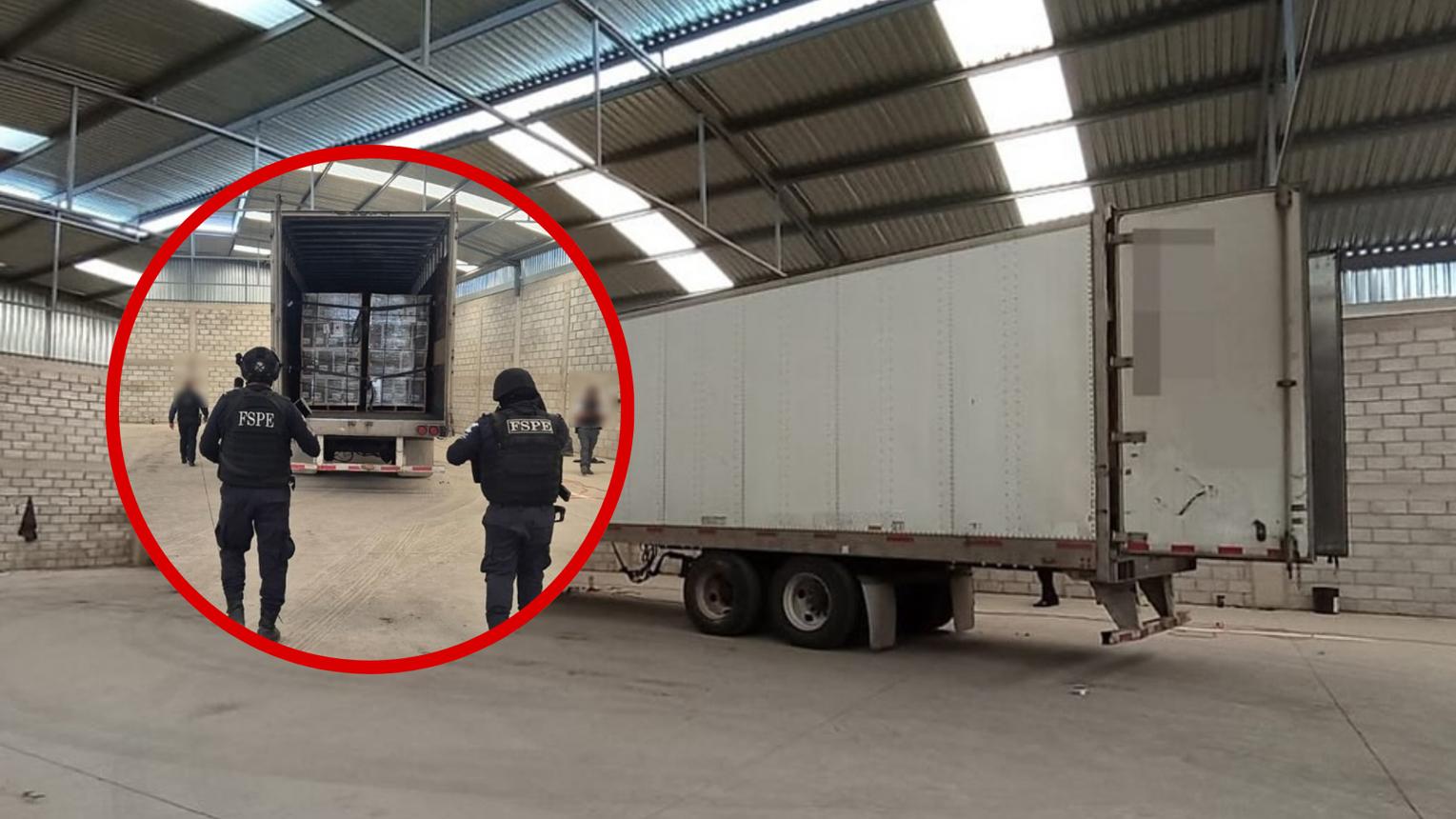
70,000 Pints Stolen: Tracking High-Risk Drinks Cargo
Drinks are a major global cargo-theft target. Discover how independent cargo tracking, smart labels, geofences and layered visibility can reduce risk.
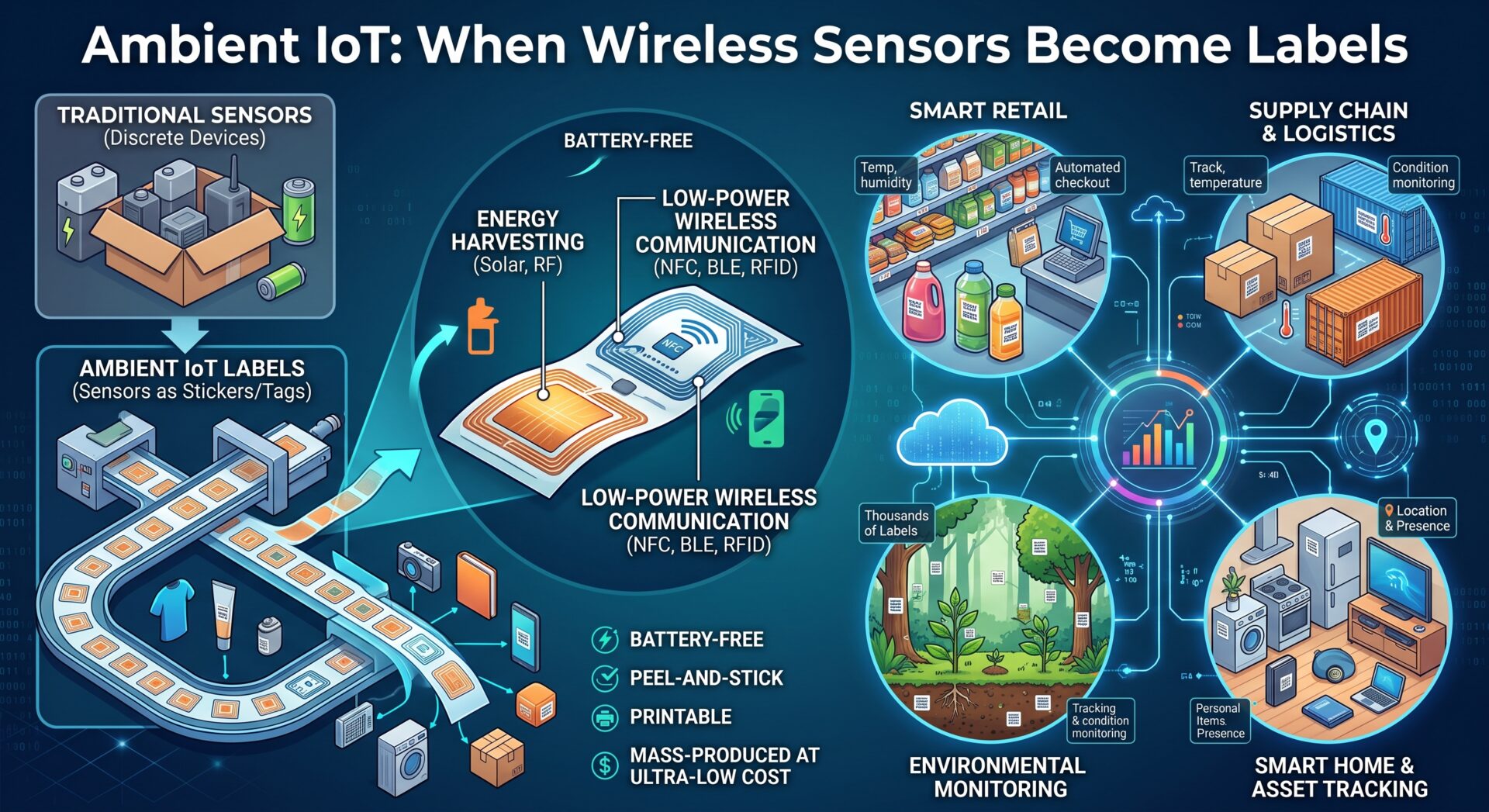
Tracking Tuesday: Ambient IoT: When Wireless Sensors Become Labels
Wiliot and CISC can test battery-free IoT Pixels at high volume. Discover why manufacturing economics may unlock ambient IoT supply chains.
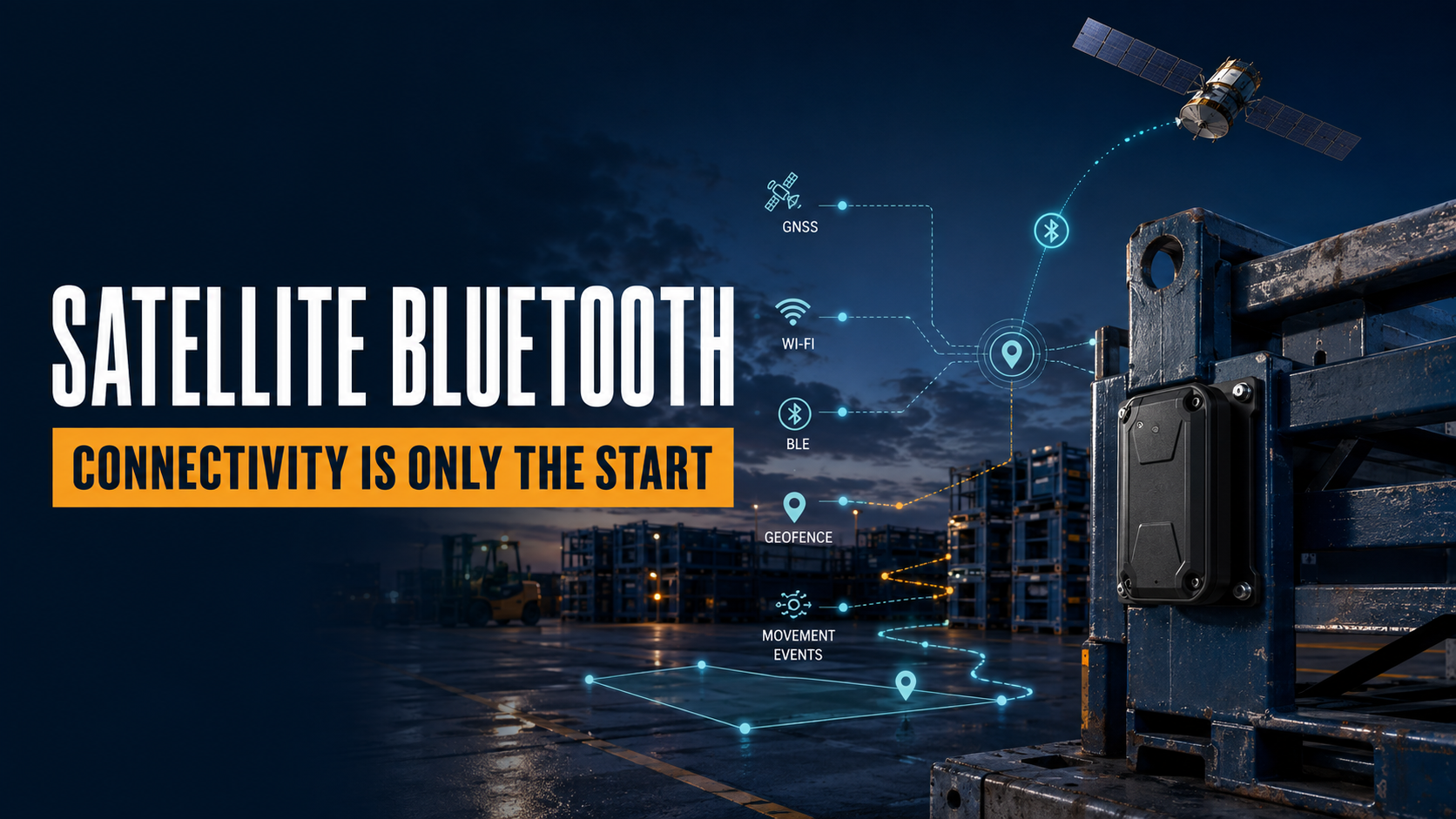
Satellite-Enabled Bluetooth Is Impressive—but Industrial Asset Tracking Needs More Than Connectivity
Hubble Network is extending Bluetooth signals to satellites, but industrial asset tracking requires more than a radio link. Explore the practical advantages of Sensolus for reusable, non-powered assets.