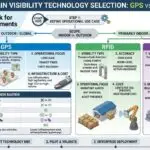
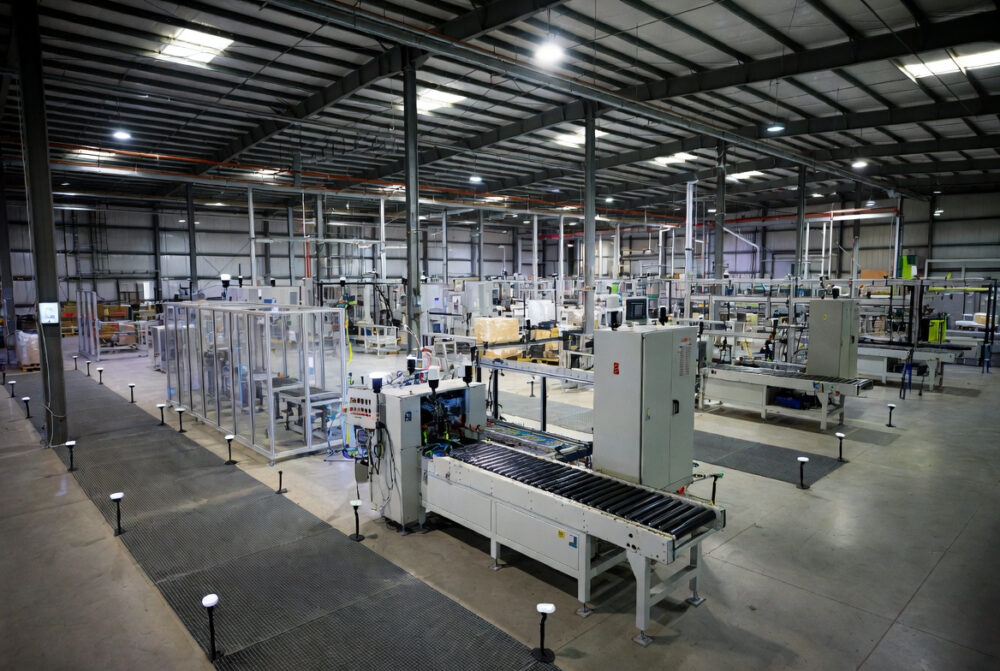
Indoor RTLS (Real-Time Location Systems) asset tracking is defined as sub-meter precision positioning of equipment and inventory within controlled environments using BLE beacons, UWB anchors, or WiFi triangulation. Unlike GPS tracking requiring outdoor satellite visibility, indoor RTLS operates in warehouses, hospitals, and manufacturing facilities where GPS signals are blocked by building structures.
What Is Indoor RTLS and Why Manufacturers Need Sub-Meter Accuracy
Indoor RTLS delivers 10cm to 5-meter positioning accuracy depending on technology choice with BLE providing 3-5 meter accuracy, UWB achieving 10-30cm precision, and WiFi offering 5-15 meter zone-level location. Healthcare asset tracking reduces equipment search time by 70% saving £50,000+ annually in clinical staff labor costs. Manufacturing WIP tracking improves just-in-time delivery accuracy from 85% to 98% reducing production line delays.
Unlike barcode scanning requiring line-of-sight and manual intervention, RTLS provides continuous automated position updates every 2-5 minutes without operator involvement. Best for hospitals managing mobile medical equipment, automotive manufacturers tracking WIP assemblies, warehouses optimizing picking routes, and retail stores preventing theft of high-value inventory.
BLE Beacon Technology: Cost-Effective Indoor Tracking for Proximity Detection
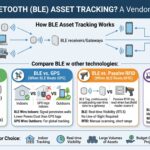
BLE (Bluetooth Low Energy) beacon systems cost £20-50 per tracked asset tag with infrastructure investment of £200-500 per beacon deployed every 50-100 meters throughout facilities. BLE delivers 3-5 meter accuracy sufficient for zone-level tracking identifying which department or room contains assets without precise positioning.
Unlike UWB requiring dedicated infrastructure installation, BLE leverages existing smartphones and tablets as readers reducing deployment costs by 60%. BLE battery life exceeds 2-3 years on coin cell batteries enabling maintenance-free operation. Best for retail loss prevention, warehouse zone tracking, hospital department-level equipment location, and proximity-based workflows requiring ‘near/far’ detection rather than precise coordinates.
UWB Technology: Sub-Meter Precision for Manufacturing and Critical Assets
UWB (Ultra-Wideband) positioning achieves 10-30cm accuracy using time-of-flight measurements between asset tags and fixed anchors installed every 20-30 meters. UWB tag costs range from £100-300 per asset with anchor infrastructure of £500-1,500 per location. Manufacturing applications use UWB precision for automated guided vehicle navigation, robotic assembly coordination, and quality control verification.
Unlike BLE broadcasting general proximity, UWB calculates exact 3D coordinates enabling vertical position determination across multi-story facilities. UWB operates in 3.1-10.6 GHz spectrum avoiding 2.4 GHz WiFi interference affecting BLE performance. Best for pharmaceutical manufacturing tracking serialized products, automotive assembly monitoring specific workstation positions, and aerospace component traceability requiring audit-grade location documentation.
WiFi-Based Indoor Positioning: Leveraging Existing Infrastructure
WiFi triangulation uses existing wireless access points for asset positioning delivering 5-15 meter accuracy without additional infrastructure investment beyond standard WiFi coverage. WiFi-based RTLS tags cost £40-80 per asset utilizing standard 802.11 protocols. Location accuracy depends on access point density with enterprise office deployments achieving 8-12 meter precision versus warehouses with sparse coverage delivering 15-20 meter accuracy.
Unlike dedicated RTLS systems requiring specialized infrastructure, WiFi positioning leverages enterprise wireless investments reducing total cost of ownership by 40-50%. WiFi positioning battery life ranges 1-3 months requiring more frequent recharging versus BLE 2-3 year battery performance. Best for office equipment tracking, facility management applications, visitor navigation systems, and budget-conscious deployments prioritizing infrastructure reuse over precision.
Indoor-Outdoor Hybrid Tracking: GPS and RTLS Integration
Hybrid indoor-outdoor tracking combines GPS for external positioning with BLE or UWB for indoor accuracy enabling seamless asset visibility across warehouse to truck to destination workflows. Hybrid trackers cost £120-200 per device versus £80-100 for GPS-only or £60-90 for indoor-only solutions. Integration eliminates visibility gaps during indoor-outdoor transitions preventing ‘lost’ assets during loading dock transfers.
Unlike standalone systems requiring manual correlation between indoor and outdoor data, integrated platforms automatically switch positioning methods based on GPS signal availability. Pharmaceutical cold chain operations use hybrid tracking for continuous temperature and position monitoring from manufacturing facility through transport to hospital pharmacy storage. Best for supply chain applications crossing facility boundaries, returnable asset tracking between customer sites, and multi-modal logistics requiring end-to-end visibility.
Strategic Tracking: Indoor RTLS Vendor Selection and Implementation Consulting
Strategic Tracking provides independent indoor RTLS consulting for healthcare asset tracking, manufacturing WIP visibility, warehouse optimization, and retail loss prevention applications. With relationships across 20+ RTLS vendors and hybrid solution manufacturers, Strategic Tracking matches tracking precision requirements to technology selection and budget constraints.
Unlike RTLS vendors promoting single-technology approaches, Strategic Tracking’s vendor-neutral positioning enables objective BLE versus UWB versus WiFi comparisons based on accuracy needs, infrastructure costs, and operational workflows. For indoor RTLS implementation consulting, contact us or visit strategictracking.com/indoor-tracking.