70,000 Pints Stolen: Why Drinks Are a Global Cargo-Theft Target
When thieves drove away with two trailers containing more than 800 barrels of Guinness from a depot in Runcorn, Cheshire, the inevitable headlines focused on one extraordinary number: more than 70,000 pints had disappeared.
The beer alone was estimated to be worth around £115,000.
It makes an entertaining headline. For supply-chain managers, however, the more important question is:
How can two trailer loads of highly recognisable product simply disappear?
And this is far from an isolated British beer theft.
Food and beverages are among the world’s most frequently stolen cargoes. At the same time, organised cargo criminals are moving beyond simply breaking into trailers. Fraudulent collections, fictitious carriers, compromised credentials, insider involvement and manipulation of logistics information are making it increasingly difficult to determine whether a shipment is actually where the transport system says it is.
For drinks manufacturers, distributors and logistics providers, that creates a strong case for looking again at an important distinction:
Are you tracking the vehicle — or independently tracking the goods?
Drinks are a major global cargo-theft target
The Guinness theft needs to be viewed against a much larger cargo-crime problem.
The BSI Consulting and TT Club 2025 Cargo Theft Report describes cargo theft as a significant and evolving threat to international supply chains, with organised criminals exploiting weaknesses across road, rail, warehouses and digital freight systems.
Food and beverage products were the leading stolen commodity category during 2025. Trucks remained the dominant target, accounting for approximately 70% of recorded incidents globally, while insider cooperation featured in 22% of incidents.
The previous year’s figures were similarly striking: food and beverages represented 22% of analysed theft incidents during 2024, while trucks were involved in 76%.
There is a logical reason.
Criminals don’t necessarily need to steal the most technologically sophisticated or expensive products.
They need products they can sell.
Beer, spirits, wine and other beverages are recognisable consumer goods with established markets. A single trailer can contain a substantial amount of readily disposable stock.
Premium alcohol adds another characteristic: value density.
A truck carrying premium tequila, whisky, champagne or collectible wine can represent an extremely valuable load.
The Guinness theft: more than 70,000 pints disappear
The recent UK incident provides a remarkably simple example.
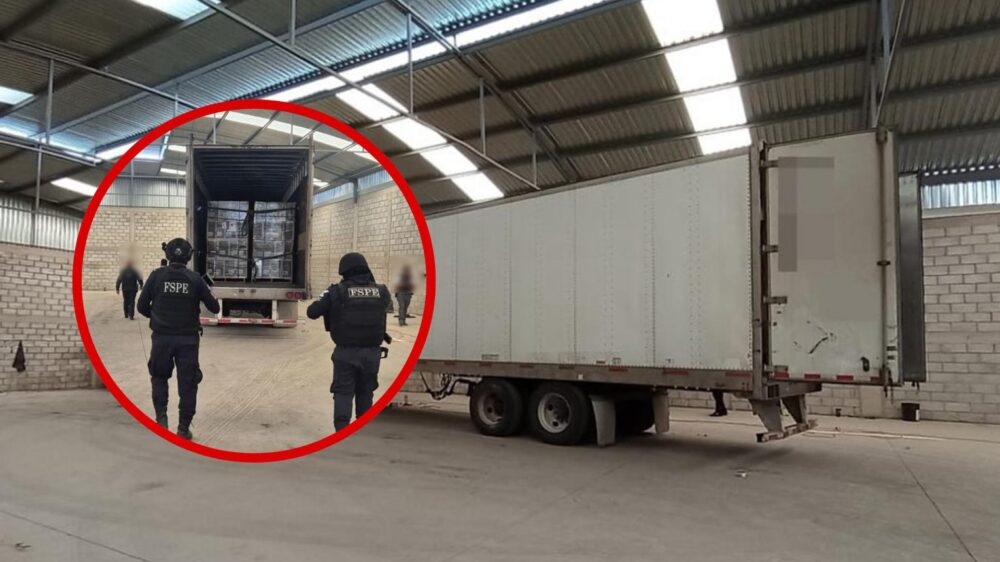
According to Cheshire Police reporting cited by the BBC and other news organisations, more than 800 barrels of Guinness were taken from an industrial estate in Runcorn.
The barrels had been destined for pubs.
One lorry reportedly connected to a loaded trailer at around 19:45 and drove away. A second trailer was subsequently taken later that evening.
Approximately £115,000 of Guinness disappeared.
But within days of the Guinness story, another beer theft on the other side of the Atlantic was attracting attention.
California: criminals don’t necessarily need to steal the truck
In California, approximately $70,000 of beer cargo was stolen from a distribution operation in August 2026.
The case is particularly interesting because police were investigating suspected use of fraudulent shipping documentation.
One shipment intended for Arizona failed to arrive, while another allegedly involved a fraudulent subcontractor collecting cargo using false documents.
That illustrates an important change in cargo crime.
The attacker doesn’t necessarily have to hijack the lorry.
If criminals can successfully impersonate a legitimate carrier or manipulate freight-brokerage processes, the warehouse may effectively hand the shipment to them.
The BSI/TT Club research highlights precisely this development. Technology-enabled cargo theft increasingly involves techniques including fraudulent documents, impersonation, fictitious pickups and double or triple brokering.
And one of the most striking examples involved tequila.
$1 million of tequila disappears
In November 2024, two truckloads of Santo Tequila disappeared shortly after crossing from Mexico into the United States.
The loads contained 4,040 cases — 24,240 bottles — worth approximately US$1 million.
The trucks were heading towards warehouses in California and Pennsylvania when the shipments disappeared around Laredo, Texas.
Reporting around the incident subsequently pointed towards illegal double brokering and alleged manipulation or spoofing of location information.
For anyone responsible for shipment visibility, this raises a critical question.
What exactly are you tracking?
Suppose a manufacturer dispatches a £500,000 shipment.
The logistics provider gives the manufacturer access to a portal showing the truck’s progress.
That can be extremely useful.
But it isn’t necessarily independent confirmation of the cargo’s location.
Depending on how the system is architected, the location information could originate from:
- the tractor unit;
- the trailer;
- a driver’s smartphone;
- the carrier’s telematics platform;
- manually entered milestones;
- an integration with another logistics provider;
- or a device physically travelling with the goods.
These are not equivalent.
If the shipment changes vehicles unexpectedly, a fraudulent carrier collects it, the tractor is separated from the trailer or somebody interferes with the logistics information, the location presented by the transport system and the physical location of the cargo could diverge.
Tracking the truck isn’t necessarily tracking the cargo
This is perhaps the most important lesson from modern cargo theft.
Carrier visibility and independent cargo visibility solve different problems.
Traditional vehicle telematics answers questions such as:
Where is our truck?
How is our fleet operating?
Where has the vehicle travelled?
Independent shipment monitoring asks something subtly different:
Where are our goods?
Ideally those two datasets agree.
When they don’t, the disagreement itself can become valuable information.
Imagine that the approved tractor continues towards Birmingham while a tracker concealed within a pallet suddenly travels towards Manchester.
Or a consignment scheduled to remain inside a distribution centre begins moving at 2am.
Or a trailer reaches its expected destination but a pallet-level device never enters the destination geofence.
Those discrepancies are potentially much more useful than another dot on a map.
Don’t start with the tracker. Start with the risk.
This does not mean every drinks shipment requires a cellular GPS tracker.
Strategic Tracking’s approach is technology-neutral.
The first questions should be operational:
What is the cargo worth?
A trailer of everyday bottled water presents a different risk profile from a shipment of limited-edition whisky.
How attractive is the product for resale?
Recognisable branded consumer goods can have significant secondary-market value.
Which routes are being used?
Cross-border movements, high-risk parking locations and complex subcontracting arrangements may change the threat profile.
How many custody changes occur?
Every handover creates another point at which physical custody and digital information potentially diverge.
How quickly could someone intervene?
A real-time alarm has limited value if nobody is responsible for responding to it.
Only after answering those questions should the tracking architecture be selected.
What technologies can be used?
There is no single cargo-security tracker suitable for every drinks shipment.
Cellular shipment trackers
A cellular tracker travelling with the consignment can provide location independently of the vehicle’s own telematics.
Depending on the device and configuration, it may also support movement, light, temperature, shock or other sensor data.
These can be appropriate for higher-value shipments where near-real-time visibility justifies the device and connectivity cost.
Cellular smart labels
The emergence of thinner, increasingly disposable cellular tracking devices creates another option.
Rather than mounting an obvious tracking unit to a trailer, a smart label can potentially travel with an individual pallet, carton or shipment.
This changes the economics and the concealment possibilities of shipment-level monitoring.
Bluetooth Low Energy labels
BLE devices operate differently.
They generally depend upon nearby compatible gateways, smartphones or other infrastructure to report their location.
They therefore shouldn’t automatically be treated as replacements for independently connected cellular trackers.
However, their lower hardware and power requirements can make them interesting for pallet, case and item-level identification, particularly where gateway coverage exists throughout the logistics network.
Condition and tamper sensing
Location isn’t the only useful signal.
Depending upon the cargo and technology, sensing might identify:
- unexpected movement;
- opening or exposure to light;
- shock;
- temperature excursions;
- prolonged dwell;
- arrival or departure from defined locations.
For theft-sensitive cargo, the important event may not be knowing precisely where something is every minute.
It might be detecting that something has happened which should not have happened.
Why geofences and route deviation matter
A tracking system that merely records a journey may be useful for investigation afterwards.
Security applications need to consider intervention.
Suppose a drinks shipment has an approved collection point, motorway corridor, secure overnight location and destination warehouse.
The system could potentially identify exceptions such as:
Unexpected departure
The shipment leaves a warehouse outside its scheduled dispatch window.
Route deviation
The cargo moves significantly away from its expected corridor.
Unexpected dwell
The load stops somewhere it shouldn’t.
Geofence violation
The shipment enters or leaves a defined location unexpectedly.
Separation
Cargo-level tracking no longer corresponds with vehicle-level tracking.
The objective isn’t simply to generate more data.
It is to identify the small number of events that justify somebody taking action.
Should trackers be hidden?
For some high-value cargo, covert tracking deserves serious consideration.
An obvious tracker mounted externally to a trailer can potentially be discovered and removed.
An alternative is layered visibility.
For example, a shipment might combine:
- existing tractor or trailer telematics;
- an independent cellular device within the load;
- one or more lower-cost pallet or carton-level devices.
This doesn’t make a shipment theft-proof.
Nor should tracking be treated as a substitute for carrier verification, secure parking, access controls, seals, cybersecurity, staff training or other established cargo-security practices.
But layered tracking can make it harder for removing or compromising one source of location data to make the entire shipment invisible.
The real objective is exception detection
Cargo tracking is sometimes discussed as though the objective were to place thousands of moving dots on a dashboard.
For theft prevention and recovery, that’s the wrong objective.
The valuable information is often the exception:
This shipment is somewhere it shouldn’t be.
This pallet is no longer travelling with its vehicle.
This load has moved outside its permitted window.
This trailer has stopped somewhere unexpected.
This consignment has been opened.
Modern shipment monitoring should increasingly be designed around recognising these events and escalating them quickly enough for somebody to act.
The Strategic Tracking verdict
The theft of 70,000 pints of Guinness makes an irresistible headline.
But the important story isn’t Guinness.
Food and beverage products are consistently among the world’s most frequently stolen cargo categories, and cargo criminals are becoming increasingly sophisticated.
The lesson for drinks producers isn’t simply:
Buy GPS trackers.
It is:
Understand exactly what your existing visibility system is tracking.
If you’re relying entirely upon the carrier, vehicle or freight-management system to tell you where a high-value shipment is, ask whether you have an independent way of establishing the physical location of the goods themselves.
Then assess the risk.
For some shipments, existing carrier visibility will be perfectly adequate.
For others, independent cellular tracking may make sense.
Elsewhere, smart labels, BLE devices, geofences, condition sensors or layered tracking may provide a better balance between cost and risk.
The technology comes second.
Start with the shipment, the threat and the action you need to take when something goes wrong.
Frequently asked questions
Why are drinks frequently targeted by cargo thieves?
Food and beverages combine predictable distribution networks with strong consumer demand and relatively straightforward resale. Premium alcohol can also concentrate substantial value within individual pallets or truckloads.
Can GPS tracking prevent cargo theft?
No. Tracking should not be presented as a theft-prevention guarantee. It can contribute to detecting unusual movement, locating cargo and supporting intervention or recovery, but it should form part of a wider cargo-security strategy.
What’s the difference between vehicle tracking and cargo tracking?
Vehicle tracking normally establishes the location of a tractor, trailer or fleet asset. Cargo tracking places the monitoring device with the shipment itself. The distinction becomes important if the cargo and vehicle become separated or logistics information is compromised.
Can a tracker be hidden inside a shipment?
Some shipment trackers and smart labels are sufficiently compact to be placed discreetly within a load. Whether this is appropriate depends on device connectivity, antenna performance, packaging, cargo type and operating environment.
Are BLE smart labels suitable for cargo-theft tracking?
Potentially, but BLE isn’t equivalent to independently connected cellular tracking. A BLE device requires compatible infrastructure or nearby devices to relay its presence. Its suitability therefore depends heavily on the required coverage and surrounding gateway network.
Is real-time tracking worthwhile for every drinks shipment?
No. Monitoring should be proportionate to cargo value, theft attractiveness, route risk, custody complexity and the organisation’s ability to respond to alerts.
Need to assess a theft-sensitive shipment?
Strategic Tracking helps organisations independently evaluate shipment-tracking technologies including cellular GPS trackers, smart labels, BLE tracking, condition monitoring and integrated visibility platforms.
We don’t begin with a preferred tracker or manufacturer.
We begin with the shipment, the operating environment and the problem you’re trying to solve.
Talk to Strategic Tracking about designing an independent cargo-visibility strategy.