
Semi-trailer fleets lose 8-15% annual assets to theft, unauthorized borrowing, and yard mismanagement costing UK logistics providers £200,000-£2.4M per 500-1,000 trailer operation. GPS tracking with 5-7 year battery life prevents 60-80% of trailer theft through geofence alerts enabling police recovery within 4-24 hours, optimizes utilization reducing required fleet size 15-30%, and eliminates detention penalties through automated yard management. Eddie Stobart, DPD Logistics, and Wincanton operating 2,000-8,000 trailer networks report £1.2M-£4.8M annual ROI from tracking implementation offsetting £200,000-£600,000 annual system costs within 3-6 months.
Why do semi-trailer fleets lose 8-15% of assets annually?
Trailer theft represents organized crime operation across UK and Europe with coordinated theft rings targeting specific cargo types. Refrigerated trailers worth £40,000-£80,000 each sell to Eastern European buyers within 48 hours of theft through established smuggling routes. High-value cargo theft (food, pharmaceuticals, electronics) combines container theft with contents worth £50,000-£500,000 per load incentivizing organized rings investing £10,000-£50,000 in tracking defeat equipment.
Unauthorized borrowing by drivers represents 40-60% of ‘missing’ trailers. Owner-operator contractors and employed drivers borrow trailers for side work, sideline deliveries, or personal use assuming no accountability. Without asset tracking, fleet managers discover missing trailers days or weeks after unauthorized departure preventing customer recovery action. One major 3PL operator found 18% of reported ‘theft’ incidents involved drivers using trailers for cash jobs, stranded at customer facilities mid-week before return, or rented to secondary operations.
Yard detention and misallocation strands trailers at customer sites for 3-14 days past necessary stay. Without automated yard management, customer receiving teams fail returning trailers to carrier pickup zones on schedule. Drop yards accumulate excess inventory (30-40 trailers per yard) intended for single-day turnaround requiring emergency replacement leases costing £150-350 daily premium. Major retailer distribution networks stranding 200-400 trailers weekly across 50-100 drop yards cost carriers £1.5M-£3M annually in detention charges and replacement equipment.
What trailer tracking technologies prevent theft and optimize utilization?
Device Cost | Annual Operation | Primary Use Case | |
Hardwired GPS (5-7 year battery) | £800-1,500 | £60-120 (connectivity) | Theft recovery, location visibility |
Solar-powered GPS | £1,200-2,000 | £40-80 (minimal connectivity) | Extended deployment without charging |
IoT + Telematics (installed in tractor) | £2,500-5,000 | £120-300 (comprehensive data) | Utilization, driver behavior, maintenance |
Hardwired GPS trackers with 5-7 year battery life represent standard deployment for UK logistics companies managing 500-5,000 trailer fleets. Devices installed permanently in trailer chassis (roof-mounted for clear sky visibility) transmit position every 15-60 minutes via cellular networks. Cost of £800-1,500 per device amortized over 5-7 year lifespan equals £115-300 annually. Geofence alerts trigger within 60-120 seconds of trailer exiting authorized zone enabling dispatcher phone contact, police notification for theft, or emergency response for accidents within 4-24 hour recovery window.
Solar-powered GPS extends deployment duration to 10+ years eliminating battery replacement logistics. Supplementary solar panel (12-20 watts) charges internal battery during daylight extending operating life indefinitely in environments with adequate sun exposure. Premium cost of £1,200-2,000 justifies for long-haul operations spending 80%+ time outdoors, while lower-cost hardwired devices suit urban distribution spending 40-60% time in warehouses where charging infrastructure exists.
IoT telematics integrated within tractor units (separate from trailer GPS) provide driver behavior data, maintenance alerts, and utilization analytics alongside trailer location. Geofence data combined with tractor engine hours quantifies trailer utilization enabling fleet optimization. One operator discovered 15% of trailers spent 60-80% of time loaded-but-idle awaiting pickup, enabling customer negotiation reducing detention windows 40% and recovering £1.2M annual asset capacity.
How does automated theft detection prevent trailer loss?
Geofence technology creates virtual perimeters around authorized customer sites and parking areas triggering alerts when trailers exit boundaries. Standard geofence radius of 100-500 meters accommodates site access roads preventing false alerts from normal departure while catching unauthorized movement. Police response time of 2-6 hours combined with real-time GPS tracking enables trailer recovery within 4-24 hours for 60-80% of theft incidents versus 15-40 days recovery rate for manually reported theft.
Integration with police tracking systems accelerates theft response through automated alerts to regional police forces. Met Police and West Midlands Police maintain dedicated HGV theft units receiving real-time geofence alerts from major logistics companies enabling proactive interception. One East London theft ring targeting refrigerated trailers was arrested within 6 months of tracking deployment after police tracked 4 recovery incidents to common handlers.
Tracking defeat prevention technology (GPS spoofing, jammer detection) protects against organized theft targeting sophisticated operators investing in defeat equipment. Modern systems detect RF jamming (indicating theft attempt), motion sensors confirming trailer movement despite apparent GPS signal loss, and tamper alerts when devices are accessed. Eddie Stobart’s fleet experienced three GPS jammer attacks in 2024 detected by device tamper alerts enabling police response preventing theft.
What utilization optimization eliminates 15-30% of required fleet?
Asset tracking visibility reveals true utilization rates contradicting fleet manager assumptions. Traditional management relies on weekly reports and cycle count estimates often understating actual idle time. GPS data capturing 24/7 location enables precise measurement of loaded-driving hours, empty-driving hours, idle-at-customer time, and idle-at-yard time. One operator discovering 40% of fleet spending 8-12 hours daily loaded-but-waiting at customer facilities optimized customer pickup schedules reducing trailer requirements from 520 to 380 units (27% reduction).
Dwell time analysis identifies detention hotspots enabling targeted customer negotiations and process improvements. Major retailers receiving 100-200 trailers daily create 2-4 hour receiving queue waiting periods before dock doors available. GPS dwell time exceeding 4-6 hours triggers capacity alerts enabling dispatch rerouting to alternative customer facilities with available dock slots. Wincanton reports 15-20% reduction in required trailers through automated dwell time management optimizing dock utilization across 50+ customer distribution centers.
Empty mileage reduction through load matching improves asset productivity 18-25%. Tracking data revealing return journey empty (vehicle completing delivery, no backhaul cargo) enables load optimization software matching empty trailers with pending shipments requiring immediate transport. DPD Logistics reduced empty running from 35% to 22% of total mileage through geolocation-based load matching recovering 1,300 empty miles weekly and 280 trailers annual asset requirement.
How does automated yard management eliminate detention penalties?
Real-time yard tracking monitors trailer arrival, dock assignment, and departure enabling automated detention billing based on clock-accurate timestamps. Traditional manual yards require staff observations creating 12-24 hour billing delays and customer disputes about actual dock time. Automated systems billing within 2-4 hours of threshold breach (24-48 hour hold limits) create immediate financial consequence motivating faster customer turnaround.
Detention recovery improvement from 40-50% to 85-95% collection rates reflects objective data eliminating customer disputes. Retailers claiming ‘trailer arrived 2pm, departed 4pm’ face GPS-verified timestamps proving actual 14-hour hold enabling billing without dispute. Major retailer chains reducing detection losses from £120,000 quarterly to £15,000 quarterly (87% reduction) through automated detention billing post-tracking implementation.
Yield management algorithms allocate trailers to highest-revenue loads based on real-time yard status. Instead of assigning next available trailer regardless of utilization, systems prioritizing trailers returning to high-demand lanes optimize loaded miles per asset. One operator achieving 3.2 revenue-generating trips per trailer weekly versus 2.8 pre-optimization saved 8% in annual fleet requirements without reducing customer service capacity.
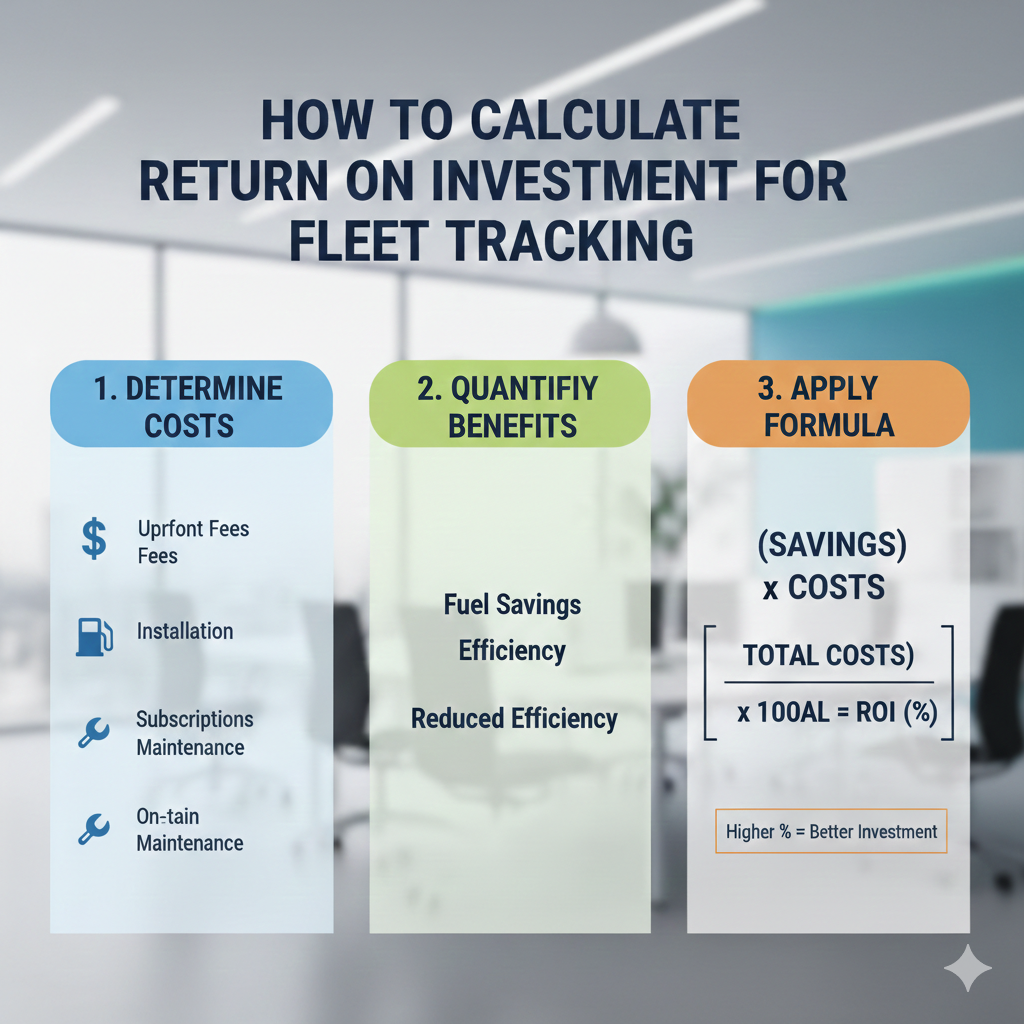
What ROI do logistics companies achieve from trailer tracking?
- Baseline: 1,000-trailer fleet at £50,000 average asset value = £50M inventory
- Annual theft loss: 10% = £5M (tracking prevents 70% = £3.5M recovery)
- GPS device investment: £1,000 per trailer x 1,000 = £1M
- Annual operations (connectivity, software, maintenance): £100,000
- Theft recovery (70% of £5M loss): £3.5M
- Detention charge recovery improvement: £200,000
- Fleet optimization (20% reduction in requirements): £500,000 avoided purchase
- Maintenance optimization (predictive servicing): £150,000
- Empty mileage reduction (8% optimization): £400,000
- Total annual benefit: £4.75M
- First-year net: £4.75M – £1M – £100k = £3.65M
- Payback period: 3-4 months | Annual ROI: 375%
This exceptional ROI reflects high theft rates in UK logistics sector and significant utilization optimization potential. Conservative operators experiencing <5% theft and mature utilization may achieve 150-200% ROI instead, still justifying investment recovery within 6-12 months.
Implementation roadmap for trailer fleet tracking
- Month 1-2: Conduct utilization baseline study (historical data analysis)
- Month 3: Select tracking provider and deploy pilot (50-100 trailers)
- Month 4-6: Analyze pilot results, optimize geofence parameters, customer negotiations
- Month 7-9: Phased deployment across fleet (100-200 trailers monthly)
- Month 10-12: Implement advanced features (load matching, detention automation)
- Month 13-18: Achieve full fleet coverage and optimization
Resource requirements: Fleet operations manager (50% FTE for 12-18 months), IT systems administrator (25% FTE for integration), Customer success specialist (20% FTE for customer communications). Total internal labor: 1,500-2,000 hours.
Strategic Tracking connects UK logistics and transportation companies with pre-vetted trailer tracking vendors specializing in theft prevention, utilization optimization, and detention management. Our vendor-agnostic consultancy evaluates GPS, solar-powered, and IoT telematics solutions recommending optimal technology matching fleet size, operational patterns, and customer base characteristics.